
How Microsoft Uses AI to Accelerate Clean Energy Permits
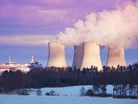
Microsoft has developed Gen AI systems to accelerate the permitting process for clean energy projects, targeting nuclear power installations where approval can take more than a decade and cost millions of dollars.
The initiative emerged from a company hackathon, collaborative events where engineers develop software solutions in compressed timeframes.
Microsoft identified permitting as a critical bottleneck preventing rapid deployment of clean energy infrastructure needed to address climate change.
“Permitting is the single biggest bottleneck to deploying clean energy fast enough to avoid runaway climate change,” Microsoft says.
“That’s not just inefficient – it’s existential.”
The technology giant’s approach uses Azure OpenAI, Microsoft’s cloud-based AI service, combined with Kernel Memory, a data processing system, to generate first drafts of regulatory documents in five minutes.

Traditional methods for creating these submissions require months or years of manual preparation.
Why Microsoft targets the nuclear industry
The project originated during a 2022 gathering of the Repowering Coal Consortium at Microsoft’s Dublin offices.
Fifty industry representatives from the advanced nuclear sector identified permitting as the primary obstacle to scaling nuclear deployment from one reactor per decade in Western countries to 2,500 reactors needed globally to replace coal power generation.
Nuclear energy projects face particularly complex regulatory requirements due to safety considerations.
Gen AI can process vast regulatory datasets and produce content in formats required by different licensing authorities.
Mark Tipping, global offshore power to X director at Lloyd’s Register, a classification society that provides technical assurance services, views the initiative as addressing fundamental industry challenges.
“Together, we’re tackling one of the biggest challenges in deploying nuclear technology, which is navigating complex, slow and costly licensing processes,” he says.
The Microsoft team initially attempted to solve permitting challenges using conventional software programming approaches before discovering that traditional methods could not handle the complexity and variability of regulatory requirements.
Conor Kelly, a team member involved in the project, explains the transition to AI solutions. “We first started trying without Gen AI... just normal software programming. It was an intractable problem,” he says.
The breakthrough occurred when engineers realised Gen AI could dynamically extract information from diverse datasets and create content matching the specific formats demanded by regulatory bodies across different jurisdictions.
Microsoft’s three-pronged AI solution
Microsoft’s system addresses permitting challenges through automated document creation, query capabilities and pre-submission review processes.
The automated component uses generative AI to draft regulatory submissions from historical project data and current requirements.
The system includes a Copilot interface, Microsoft’s AI assistant technology, which provides permitting engineers with access to complete regulatory datasets through natural language queries.
Permitting is the single biggest bottleneck to deploying clean energy fast enough to avoid runaway climate change... That's not just inefficient – it's existential.
This component operates within companies’ own Azure cloud tenants to prevent sensitive information from leaving corporate networks.
Pre-submission review capabilities analyse draft documents to identify missing information before formal regulatory submission, reducing delays that occur when authorities request additional data.
The project has demonstrated productivity improvements of 25-75% in permitting workflows across multiple energy industry companies.
These gains represent significant time and cost savings in an industry where regulatory delays can postpone projects for years.
Ed Essey, Senior Director of Business Value at Microsoft, emphasises how the project evolved from experimental work to strategic initiative: “It’s incredible to see that what began as a side project got Microsoft into nuclear,” he says.
The initiative has prompted formation of a cross-company task force on AI for permitting, with support from senior Microsoft executives including Chief Sustainability Officer Melanie Nakagawa and president Brad Smith.
Expansion beyond nuclear to renewable energy sectors
While initially focused on nuclear permitting, Microsoft has expanded the AI system to cover renewable energy, mining and other clean energy sectors.
The team now operates within Microsoft’s MCAPS Energy & Resources division, developing applications for mining and offshore wind projects.
Conor describes the broader applicability of the technology beyond its original nuclear focus: “This project was about realising much wider applicability – not just this specific nuclear permitting document, but right across the nuclear permitting field and into wind and other renewable energy permitting,” he says.
The expansion mirrors growing demand for AI-powered regulatory compliance tools across energy sectors facing similar permitting challenges.
Wind farms, solar installations and mining operations all require extensive environmental and safety documentation before receiving construction approval.
Microsoft is collaborating with regulatory authorities to improve their processing capabilities, ensuring that faster industry submissions do not overwhelm public sector review capacity. This coordination aims to create system-wide efficiency improvements rather than simply shifting bottlenecks from industry to government..
“This project was about realising much wider applicability – not just this specific nuclear permitting document, but right across the nuclear permitting field and into wind and other renewable energy permitting,” Conor concludes.
