
How Microsoft, IBM and Huawei Use AI to Make Cities Smarter
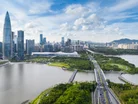
Cities consume 78% of global energy and produce more than 60% of greenhouse gas emissions, while housing 56% of the world's population – a figure set to reach 68% by 2050.
The challenge is to build infrastructure that can withstand climate shocks while remaining sustainable and realistic for cash-strapped agencies to maintain.
Three technology leaders – Microsoft, IBM and Huawei – are now pioneering AI solutions that reimagine how smart cities operate. What all three have in commo, is using AI to make cities proactive rather than reactive.

Microsoft: Transforming crisis prediction into prevention
Jakarta, the city of the Republic of Indonesia, offers a compelling case study.
Flooding has long threatened millions of residents, but the city's Smart City programme now uses AI analytics to predict floods six hours ahead – enough time to close floodgates, activate pumps and push alerts through the JAKI app before disaster strikes.
The system pulls together data from rainfall sensors, river gauges and weather services, turning what was once educated guesswork into actionable intelligence.
“We're now entering an era where we genuinely don't know what's going to happen next,” says Hannah Prior, Climate Resilience Lead for Worldwide Public Sector at Microsoft.
“In the past, city planners would have said, 'Let's plan for a one-in-100-year flood.' But those kinds of events have become far more common and therefore more difficult to plan for.”
The implications stretch beyond flood management.
US utility Evergy has built 275 automation solutions on Microsoft Power Platform, saving 120,000 hours annually through everything from drone-based power line inspections to intelligent inventory management.
Meanwhile in southern France, the Société du Canal de Provence uses Azure technologies to monitor its 6,000-kilometre water network, combining IoT sensors with meteorological data to provide farmers with adaptive irrigation advice and strengthen drought preparedness.
IBM: Targeting urban heat with AI-powered resilience
IBM has selected C40 Cities – a network representing nearly 100 mayors worldwide – for a two-year collaboration developing AI solutions that help smart cities manage what's becoming an existential threat: extreme heat.
The partnership tackles the cascading effects of urban heat islands, from stressed energy grids and rising mortality rates to deepening socioeconomic disparities that hit vulnerable communities hardest.
“Cities are on the frontline of an extreme heat crisis,” says Mark Watts, Executive Director of C40 Cities.
“Through this collaboration with IBM's Impact Accelerator, we have a groundbreaking opportunity to harness AI-driven solutions to help cities analyse risks, strengthen resilience and protect their most vulnerable communities.”
IBM is putting up to US$3m in technology and services on the table through its Sustainability Accelerator programme, which applies hybrid cloud and AI to initiatives from nonprofits and government organisations.
The company has already supported more than 131,000 direct beneficiaries through sustainable agriculture projects, with another 1.8 million projected to benefit from clean energy initiatives.
The heat management work follows IBM's established Garage methodology – taking projects from concept through to pilot deployment and then scaling across multiple cities.
Huawei: Building integrated smart city infrastructure
Huawei's Qianhai Smart City Project in Shenzhen takes a more comprehensive approach, creating a digital ecosystem that weaves together 5G networks, AI, IoT and blockchain technologies.
Operating as a cross-border innovation testbed between Shenzhen and Hong Kong, the infrastructure now supports over 18 million residents through more than 100 AI applications and 1,300 service systems.
At the company's recent Data Centre Innovation Summit, Huawei introduced what it calls AI DC infrastructure – focused squarely on compute efficiency, data-AI convergence and resilience.
The Xinghe AI Fabric 2.0 solution uses a three-layer architecture comprising AI Brain, AI Connectivity and AI Network Elements to handle the rapid iteration of AI technologies.
“Infrastructure with superior compute efficiency, data-AI convergence, as well as resilience and reliability is crucial for creating high-quality AI DCs,” says Michael Ma, Vice President of Huawei.
AI LIVE: The London Summit 2026
Interested in learning more about AI in sustainability?
AI LIVE: The London Summit will be staged at Olympia London on 20-21 October 2026, bringing together more than 2,000+ global leaders.
The event offers an opportunity for attendees to gain valuable insights, engage with industry experts and connect with key decision-makers advancing AI adoption and innovation.
Click here to guarantee your ticket for this unmissable event.
Company portals




Executives
Hannah Prior, PhD
Climate Resilience Lead, Worldwide Public Sector

Mark Watts
Executive Director