
Did Mark Zuckerberg Make Mistakes in Meta AI Restructure?

Meta CEO Mark Zuckerberg is admitting to internal workforce missteps following the company’s aggressive reorganisation towards an AI-native structure.
In a company memo, Mark acknowledged the friction caused by the rapid transition, whilst attempting to reassure a workforce shaken by consecutive rounds of layoffs.
Meta has funnelled billions of dollars into AI technology over the past couple of years.
The company hopes the technology will help optimise and streamline internal operations, which is a move mirrored by other companies in the technology sector this year.
However, the sheer speed of this transformation has brought unprecedented organisational challenges.
Mark says: “Given the complexity of these changes, we’ve made mistakes and will almost certainly make more.”
He says he remains “focused on providing as much stability as possible” regarding organisation changes going forward.
“I don’t want to overpromise because the world is changing in ways that are out of our control,” Mark says.
He adds that Meta does not expect more company-wide layoffs this year.

Workforce stability prioritised
The statement offers a rare glimpse into how Meta is managing the human capital required to build its AI future.
Following a sweeping restructuring in May, which saw Meta lay off 10% of its workforce globally, the company transferred 7,000 employees to new initiatives related to AI workflows.
Mark says that Meta plans to find new roles for employees who have been reassigned to train AI models following those restructuring efforts.
“By creating important new roles for people, this also allowed us to shrink the size of teams knowing that if we make mistakes in some places, then we could transfer some people back,” he says.
To mend internal culture, Mark discusses the company’s plans to increase investment in team-building initiatives.
This includes higher budgets for offsites and corporate events. Meta also plans to organise a large-scale collaborative hackathon in July to help develop its latest AI models.
A 50:1 manager ratio bottleneck
One of the most drastic revelations in the memo is the extreme flattening of the internal hierarchy at Meta.
Under the newly formed Applied AI Engineering unit, Meta now has a flat structure with a 50:1 ratio of individual contributors to managers.
Mark says Meta has taken note of concerns over the widening of manager oversight responsibilities and plans to scale back the practice.
In a January earnings call, Mark said the structure was part of a broader strategy of “elevating individual contributors and flattening teams”.
However, industry experts warn that such aggressive flattening can backfire. Discussing this form of structure, James Stanier, CTO for Veterinary at Nordhealth, spoke to LeadDev in March.
James says: “The biggest challenge at ratios like 50:1 is that the manager can no longer be the communication hub: if every question or decision routes through one person, you’ve created the worst bottleneck in the organisation.”
Layoff uncertainty persists
Despite assurances from Mark that Meta does not expect other company-wide layoffs this year, a sense of precariousness lingers. Following the company’s layoffs in May, Meta initially declined to rule out further job cuts.
According to Reuters, the restructuring, combined with previous transfers and role eliminations, is expected to ultimately affect about 20% of the 78,000-person workforce at Meta.
Mark defended the workforce reductions by separating the immediate financial realities from the long-term product roadmap, saying that the workforce cuts were unrelated to the reorganisation of teams around its AI-native structure and the plans to develop autonomous AI agents.
“We basically have two major cost centres in the company: compute infrastructure and people-oriented things,” Mark told Meta employees. He balances the immense cost of AI hardware against human overhead.
In a moment of corporate vulnerability, Mark addresses the uneven internal communication at the company.
“I also want to acknowledge that we haven’t been as clear as we aspire to be in our communication, and that’s one area I want to make sure we improve,” he says.
“I wish that I can tell you that I have a crystal ball plan for the next, like, three years of how all this stuff is going to play out. I don't. I don't think anyone does.”
Company portals

Executives

James Stanier
CTO for Veterinary
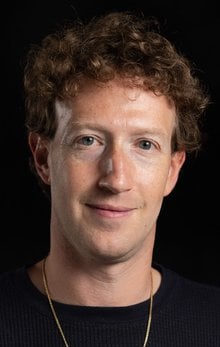
Mark Zuckerberg
CEO