Huawei Cloud Expanding AI Infrastructure for Industries
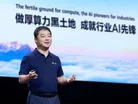
Huawei Cloud has outlined how it is building AI infrastructure and developing models for industry applications, with deployments spanning manufacturing, healthcare, agriculture, aviation and automotive sectors.
The announcement came at the industries summit at Huawei Connect 2025 in Shanghai, where Zhang Ping’an, Huawei’s Executive Director of the Board and CEO of Huawei Cloud, delivered a keynote titled ‘All Intelligence: Empowering AI Pioneers for Industries’, outlining the company's developments in AI compute services, foundation models and agent platforms designed for industry applications.
The expansion addresses infrastructure requirements for AI workloads, which demand power consumption increases from 10 kW per cabinet to 70 kW and potentially 200 kW. Huawei Cloud has deployed fully liquid-cooled AI data centres in Guizhou, Inner Mongolia, and Anhui, supporting 80 kW heat dissipation per cabinet and achieving a power usage effectiveness of 1.1.
“Huawei Cloud’s AI Token Service abstracts away the underlying technical complexity and directly provides users with the final AI computing results,” Zhang says. “This allows users to utilise the inference computing power in the most efficient way possible.”
CloudMatrix384 delivers performance gains for Huawei Cloud customers
The CloudMatrix384 supernode implements full pooling of compute, memory and storage resources. The system decouples compute tasks, storage tasks and AI expert systems, converting serial tasks into distributed parallel tasks.
In scenarios involving inference tasks with different latency requirements, including online, nearline and offline inference, Huawai Cloud says CloudMatrix384 delivers an average inference performance per card that is three to four times that of H20.
The company’s AI Compute Service customer base has grown from 321 in 2024 to 1,805 this year, with Chinese internet security company Qihoo 360’s Nano Search using the CloudMatrix384-powered token inference service to process tens of thousands of content generation requests daily.
The company has also introduced Elastic Memory Service, which expands video RAM with memory. This development reduces latency in multi-round conversations on foundation models.

“Huawei Cloud will continue to advance software-hardware synergy and architecture innovation, so as to build cloud services that constantly create value for their customers and always keep them up-to-date with the latest technologies,” Zhang says.
Pangu Models address industry requirements across 30 sectors
During the industries summit, Huawei Cloud showcased how it has developed both open-source and closed-source versions of its Pangu models. The company uses openPangu to provide practices for AI training and inference, whilst developing the closed-source Pangu Model for specific applications. The models have been applied in more than 500 scenarios across over 30 industries, including government services, finance, manufacturing, healthcare, coal mining, steel, railways, autonomous driving and meteorology.
China Southern Airlines uses the Pangu Model’s cross-modal prediction technology to predict passenger traffic and average ticket prices over an 18-month period, with prediction accuracy reaching 90%. The Chinese Academy of Agricultural Sciences has developed the Agricultural Scientific Discovery Model based on the Pangu foundation model and Pangu Scientific Computing Model, trained using agricultural knowledge and tens of billions of biological data entries. The development cycle has been shortened by more than 50%.
CloudRobo platform and Robot to Cloud Protocol for embodied AI
Huawei Cloud launched the CloudRobo Embodied AI Platform this year, deploying algorithms and logic on the cloud to enable lightweight robots. The platform uses cloud-based embodied AI training data generation to automatically generate operation trajectories for different poses, textures, and lighting conditions, increasing synthetic data scale by thousands of times.
CloudRobo provides cloud-based environment perception, global planning, and autonomous execution capabilities, achieving task execution accuracy exceeding 90%. The National and Local Co-Built Humanoid Robotics Innovation Centre in Shanghai uses data collected from real machines alongside synthetic data to train robots, improving sorting success rates to over 90% in multiple scenarios.
During his keynote at the industries summit, Zhang announced that 20 partners, including Hualong, Flexiv, Yijiahe and Avant Robotics, have joined the Robot to Cloud Protocol initiative.
Huawei Cloud is working alongside its partners to develop cloud-based integrated robot solutions in fields such as manufacturing, logistics, inspection and healthcare.
GaussDB and distributed cloud infrastructure for manufacturing applications
Based on general-purpose computing supernodes, GaussDB databases implement layered pooling of compute, memory and storage resources.
The architecture allows multi-read and multi-write on any node simultaneously. A GaussDB cluster deployed on computing supernodes can process 5.4 million transactions per minute, representing a 2.9-fold performance increase over non-supernode clusters.
Huawei Cloud has built a distributed cloud solution covering central regions, hotspot areas, and edge sites. Huawei Cloud and FAW-Volkswagen implemented China’s first automotive factory based on the distributed cloud solution, enabling collaboration between headquarters and six factories spread across five cities.
Changan Automobile uses 5G and IoT to connect 12,000 devices through infrastructure built with Huawei and China Unicom. The company has built a unified data platform that shortens order delivery lead time from 21 days to 15 days.
Charles Yang, Senior Vice President of Huawei and President of Huawei Cloud Global Marketing and Sales Service, spoke at the Industries summit about the company's global positioning.
He outlined three pillars: KooVerse, a global cloud infrastructure offering elastic cloud services, data enablement services for data supply and value, and a one-stop AI development platform for building AI-native applications.
“Digital and intelligent transformation can never be achieved by one player in a single move,” he says. “Rather, it requires close, continuous collaboration throughout the entire journey.”