AI Strategies Drive HSBC's 2025 Sustainable Finance Plan

According to the World Economic Forum, the transition to a lower-carbon economy constitutes one of today's substantial challenges.
Public funding alone falls short of addressing this scale, necessitating innovative approaches from the private sector.
In its 2025 Interim Report, HSBC divulges its multi-pronged strategy, focusing on sustainability and inclusivity with an investment of US$54.1bn in sustainable finance.
These efforts are anchored in three focal areas: transitioning to net zero, fostering inclusion and resilience, and maintaining accountability.
HSBC has committed to a net-zero transition by 2050 as part of its ambitious sustainability agenda.
Key to achieving this target is utilising artificial intelligence (AI) to enhance operational efficiency and support customers in their sustainability transitions, simultaneously unlocking shareholder value and scaling clean growth.
The ongoing review of HSBC's 2030 interim financed emission targets underscores this commitment, aiming to direct the company towards sustainable practices.

AI-driven operations and net zero goals
HSBC's deployment of AI is a critical component in meeting its net-zero goals by 2050.
AI technologies are employed across more than 600 applications, including detection, cybersecurity, transaction monitoring, customer service and risk assessment.
This broad application of AI enhances operational efficiency, directly impacting HSBC's capability to meet its sustainability objectives.
Stuart Riley, Group Chief Information Officer at HSBC, says: “Whilst some overestimate AI’s short-term impact, I believe many significantly underestimate its long-term potential.
“At HSBC, we’re investing in foundational AI capabilities alongside our ongoing projects. which will enable us to accelerate and expand AI utilisation across the bank.
“These foundations are crucial as they allow for rapid AI deployment whilst maintaining the necessary safeguards for responsible usage.
“I anticipate that within the near future, every employee will be using AI in their daily activities.”
AI academy and workforce transformation
In tandem with its sustainability efforts, HSBC has also established an AI academy to equip employees with the skills necessary for responsible AI utilisation.
This initiative is part of a broader strategy to transform the workforce, ensuring employees are adept in the emerging technology landscape.
The bank's AI strategy is not only about optimising operations but also about nurturing a workforce capable of innovating within the AI domain.
Global inclusion and AI initiatives
Beyond operational efficiencies, HSBC’s 2025 Interim Report outlines a comprehensive global inclusion strategy, utilising AI to ensure fairness and transparency in hiring processes and providing equal opportunity for advancement.
The company seeks to achieve diversity goals, aiming for 35% women in leadership roles and 3.4% representation by Black heritage colleagues by the end of 2025.
AI is utilised to create an inclusive banking experience, focusing on providing customised services that reflect HSBC's diverse clientele.
This strategic integration of AI into HR and customer service functions underscores the bank's commitment to fostering an inclusive environment, reflecting the communities it serves.
Conclusively, HSBC's investment of US$54.1bn in the first half of 2025 signals a robust approach towards embedding AI into its core activities, highlighting the transformative role of AI in achieving sustainable finance and inclusivity goals.
Through its strategic initiatives, ranging from net zero transition efforts to establishing an AI-driven workforce, HSBC sets a precedent for leveraging technology in sustainable banking practices.
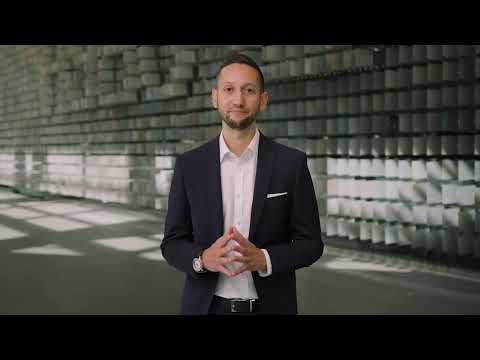
Julian Wentzel, Group Sustainability Officer, HSBC said on Linkedin: “I am pleased to share that we have provided and facilitated US$54.1 billion of sustainable finance and investments in the first half of 2025, as part of our ambition to support customers in their transition to net zero and a sustainable future.
“We also see strong growth in Asset Management.
“Against the backdrop of increasing global demand for energy and increasing focus on energy security, resilience and affordability, we are committed to supporting our customers to help address their transition needs and leveraging our expertise to support the transition and clean energy growth at scale.”