
How Nvidia and RealSense Are Advancing Robotics With AI
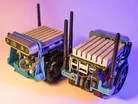
RealSense is announcing a collaboration with Nvidia, aiming to accelerate the adoption of AI-driven technologies in the humanoid and autonomous mobile robots (AMRs) sector.
The cornerstone of this collaboration is the integration of RealSense’s AI depth cameras with Nvidia’s robotics platforms, such as the Jetson Thor series and the Isaac Sim simulation system.
“This initiative cements RealSense’s role as the perception platform of choice for AMRs and humanoids,” says Nadav Orbach, CEO of RealSense.
Incorporating Nvidia’s Holoscan Sensor Bridge technology into RealSense’s offerings is another critical element of this partnership.
This system enables ultra-low-latency sensor streaming, addressing timing challenges in robotic applications.
Functional dynamics of the partnership
Key to this collaboration is RealSense’s D555 depth camera, integrated with AI capabilities.
The camera features a v5 Vision Processor and Power over Ethernet support, providing native Nvidia Holoscan Sensor Bridge streaming.
It also hosts on-camera neural networks for advanced image processing, suitable for challenging robotics environments, thanks to its robust design, global shutter and native ROS 2 support.

Nvidia’s Jetson Thor platform, enriched by the Blackwell GPU architecture, delivers up to 2,070 FP4 teraflops of AI compute within a modest 130-watt power envelope – which is a leap in AI computing power and energy efficiency when compared to its predecessor, Jetson Orin.
Enhancing robotics development and deployment
This integration simplifies the stream of depth and image data into Nvidia Isaac Sim, potentially reducing the prototype-to-deployment timeline.
System architectures tailored for the Jetson Thor platform are optimised for maximum performance, ensuring seamless real-time sensor fusion capabilities through the integration of RealSense and Nvidia technologies.
“By providing native integration and performance optimizations with Nvidia Thor and Holoscan Sensor Bridge, we are accelerating the mainstream adoption of physical AI,” adds Nadav.
The evolution of humanoid robotics
The robotics sector is undergoing rapid transformation, heading towards a projected multi-trillion-dollar market opportunity.
Within this market, humanoid robotics and AMRs are standout segments, propelled by advancements in AI processing and sensor technology.
This collaboration directly tackles key technical challenges in robotics, such as perception accuracy, processing speed and energy efficiency.
The integration shows the industry’s move towards standardised platforms to simplify development processes, as noted by industry trends.
“Together, we are enabling the robotics industry to unlock the extraordinary potential of physical AI and drive the future of intelligent machines,” says Nadav.
The impact of AI on the robotics market
The partnership positions both companies to meet surging demand for physical AI solutions across various sectors, including industrial automation, healthcare, access control and consumer robotics.
Emphasising seamless integration recognises the historical barriers posed by fragmented technology stacks to robotics adoption.
Performance enhancements in AI computing power and energy efficiency address fundamental constraints faced by mobile robotic applications.
Ultimately, the success of this partnership hinges on developer adoption and the realisation of compelling use cases that showcase the transformative potential of the new generation of robotics to the industry.
