How is Anthropic’s Certification Program Building AI Skills?

According to joint research conducted by Pearson and AWS, there is an ‘AI readiness’ gap for those looking to enter the workforce, with 53% of employers saying their primary challenge is finding graduates with the right AI skills.
As AI skills are increasingly hard to come by and as more organisations look to deploy the technology, Anthropic is shoring up AI talent by expanding the Claude Certification Program with three new role-based certifications.
Anthropic works with Pearson to deliver the initiative, drawing on its global assessment and credentialing infrastructure.
The giant US AI firm says it wants Claude certifications to be a benchmark for quality that customers, partners and the industry recognise as “verified expertise, not just a badge”.

What is the Claude Certification Program?
Anthropic launched the Claude Partner Network in March alongside a US$100m investment and a Services Track in June, which the company says is a tiered structure that reflects what a firm has actually built and delivered with Claude.
Claude certifications are granted through supervised, identity-verified exams that test the specific skills a role calls for.
Since launching in March, more than 36,000 consultants have received certification across more than 1,300 organisations.
More than 400,000 people have completed Claude training this year through Anthropic Partner Academy, its free training platform for partners.
Anthropic says its certifications span the full team a customer needs to deploy AI.
- Accenture has committed to have 50,000 certified professionals across foundational, technical and specialised tracks
- Capgemini will certify 20,000 professionals
- Cognizant will certify 10,000 developers and engineers
- Deloitte will certify 15,000 professionals
- DXC has committed to 20,000 certifications.
Expanded certification program
Anthropic is adding three new credentials to its certification initiative, including:
- Claude Certified Associate: Foundations. The programme validates practical, everyday use of Claude for anyone working on Claude-related projects. Anthropic says it applies to a wide range of roles including consultants, project leads and both business and technical expertise.
- Claude Certified Developer: Foundations. This is a certification for engineers building applications with Claude and includes training on the Claude API, tool use and agent development.
- Claude Certified Architect: Professional. This is the advanced credential, covering integration architecture, governance and evaluation, built for the scale of large enterprises.
These add to the already existing Claude Certified Architect: Foundations, which is for solution architects who design and build agent systems with Claude.
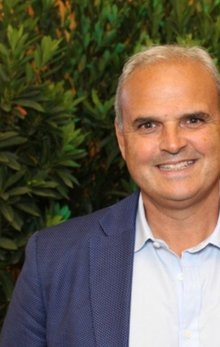
Steve Corfield, Anthropic’s Head of Global Business Development and Partnerships, says: “The companies that pull ahead over the next twelve months will be the ones with enough skilled people to put Claude to work on their hardest problems.
“Every major technology shift has been carried by a trained, trusted workforce, and AI is no different. That's what we're building with our partners, and it's why the world's largest firms are certifying their people by the tens of thousands.”
AI training in organisations
According to joint research from Pearson and Cognizant, 91% of HR leaders report employee requests for AI training have increased in the past year and 60% say their company’s learning and development programs cannot keep pace with how fast AI is transforming jobs.
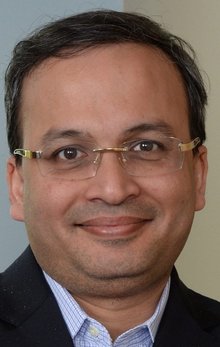
Vishaal Gupta, President, Enterprise Learning and Skills, Pearson, says: “AI is moving faster than most people's ability to build the skills to use it confidently and that gap is exactly what verified assessment is built to close.
“Anthropic has built the first proctored certification among AI labs that uses the same trusted infrastructure for skills, credentials and verified outcomes that Pearson uses across professional licensure. This is another example that shows why Anthropic is a trusted AI partner for businesses globally.”


Executives
Steve Corfield
Head of Business Development & Partnerships
Vishaal Gupta
President, Enterprise Learning and Skills; Chair, India