How is AI Powering Microsoft’s $1bn Climate Innovation Push?

Microsoft is positioning AI as a critical tool in addressing climate change, using its Climate Innovation Fund to back technologies where AI can serve as an “innovation amplifier.”
Microsoft believes AI’s capacity to measure, predict and optimise complex systems will be fundamental in developing and scaling climate solutions.
Since 2020, Microsoft’s Climate Innovation Fund has directed over US$800m of a pledged US$1bn into a portfolio of 67 companies.
While the fund’s scope is broad, its investment direction shows an increasing focus on AI-driven strategies.
Examples include an investment in Vibrant Planet, which uses AI-powered geospatial analytics to help mitigate wildfire risk.
Another is Terradot, a start-up applying AI to enhanced rock weathering, which is a method for carbon removal.
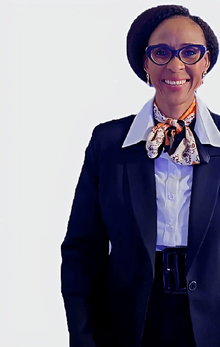
Melanie Nakagawa, Chief Sustainability Officer (CSO) at Microsoft, sees AI as essential for progress despite the energy demands of the technology itself.
“The force creating this distance from our goals in the short term is the same one that will help us build a bigger, faster and more powerful rocket to reach them in the long term: artificial intelligence,” Melanie explains. “This is not hyperbole.”
AI’s role in hard-to-abate sectors
The fund directs capital towards sectors where decarbonisation is a major challenge, including steel and aviation.
Microsoft invested in Stegra’s commercial-scale facility in Sweden, which uses green hydrogen to produce steel with up to 95% fewer emissions than traditional methods.
Microsoft paired this with purchase agreements for steel to be used in its data centre equipment.
In aviation, Microsoft is backing the development of sustainable aviation fuel (SAF). The fund has supported Twelve’s carbon transformation technology and LanzaJet’s alcohol-to-jet process.
Microsoft also participated in a book-and-claim accounting model with Alaska Airlines, enabling the reporting of emissions reductions from SAF without requiring its physical delivery for specific flights.
These initiatives create complex systems and supply chains where AI could be used for future optimisation and efficiency gains.
“Through the Microsoft Climate Innovation Fund, we invest in ambitious ideas and scalable technologies that create real impact,” says Brad Smith, Vice Chair (VC) and President of Microsoft.

Financing and scaling new climate models
A portion of the fund is dedicated to catalysing new markets and financing models. According to Microsoft, a financing gap often exists for nascent climate technologies, which can be too large for venture capital but too risky for traditional infrastructure investors.
Microsoft estimates this gap is between US$100m and US$180m per project.
To address this, the fund has committed more than US$100m to “first-of-a-kind” projects. It provided project finance for the Climeworks Orca plant, the first commercial direct air capture facility and supported this with a 10-year offtake agreement for 10,000 tons of CO₂.
In Nigeria, the fund backed Konexa’s development of renewable energy infrastructure for Heineken’s operations, aiming to create a replicable model for the country's power sector.
This strategy, which combines corporate investment with procurement and technology support, has attracted US$12bn in follow-on capital across the fund's portfolio companies, according to a report from Microsoft.
Measuring impact with data
To evaluate the success of its investments, Microsoft has worked with Rhodium Group to develop a framework that assesses both direct emissions reductions and the “catalysed” reductions that occur when new technologies are helped towards cost parity.
For emerging technologies like low-carbon steel, the fund reports that catalysed reductions could substantially exceed direct reductions.
This data-intensive approach to measuring impact is another area where AI’s analytical power can be applied to refine future investment strategies and accelerate market development.
Approximately 19% of the fund’s capital has been allocated to projects in the Global South focusing on areas like energy access and water infrastructure.
Of the start-ups in the portfolio, 22% have female CEOs or founders, and 21% come from underrepresented backgrounds.
“Our goal isn’t just to become more sustainable but also to help every organisation in Africa and the world to do the same,” says Lillian Barnard Microsoft’s Chief of Enterprise Partners for the Middle East and Africa.
Company portals


Executives
Brad Smith
Vice Chair and President
Lillian Barnard
Chief of Enterprise Partners for the Middle East & Africa
Melanie Nakagawa
Chief Sustainability Officer