Hexagon: The AI Robotics Transformation in Manufacturing
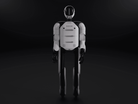
Capable of navigating factory environments, employing tools and managing tasks typically outside the scope of traditional fixed industrial robots, humanoid robots are changing the approach companies take towards automation.
Instead of necessitating a reorganisation of production lines to accommodate stationary robots, manufacturers can integrate humanoid machines directly into their current operations.
This approach proves particularly beneficial for companies grappling with worker shortages, especially in regions experiencing escalating labour costs.
The 'Future of Robotics 2035’ report by Hexagon emphasises that technological advances are aimed at fostering collaboration rather than substitution.
Interviews with executives from prominent organisations like Nvidia and Turner Construction revealed that 82% of companies ramped up their automation investments last year.
“This report clearly indicates that the future isn’t going to be a clash of robot vs. human. It’s going to be about robots working with humans,” says Burkhard Boeckem, Chief Technology Officer at Hexagon.
“We believe the most resilient and competitive organisations will be those that treat autonomy as a scaffold for human potential, not a replacement for it.”
Challenges in integrating AI robotics
Nonetheless, while humanoid robots hold promise, their deployment still poses challenges for many enterprises.
Hexagon's study shows 41% of organisations struggle with integrating these robots into existing manufacturing systems.
Issues include connectivity with legacy control systems, safety protocols and production software, presenting obstacles in seamless AI integration.
This integration hurdle shows the broader digitisation challenges prevalent in manufacturing sectors.
Factories often operate with a variety of equipment from different eras, leading to intricate technical environments that complicate straightforward automation solutions.
Humanoid robots are required to navigate not only physical layouts but also interact with diverse systems that might follow different protocols and standards.

Interestingly, enterprises prioritising human factors along with technical elements tend to achieve enhanced results.
When manufacturers involve human personnel in the deployment strategy and maintain transparent communication regarding robotic capabilities and limitations, employee acceptance reaches higher levels.
This frequently results in unforeseen benefits, with employees becoming technology proponents instead of implementation barriers.
This underlines the importance of securing workforce buy-in for successful deployment.
“Humans are adaptive, creative and makers that are not replaceable cogs for output-driven AI,” says Dr. Juliet Aiken, Organisational Psychologist at Conducere + Volta, contributing to Hexagon’s report.
“This report reflects on where human strengths surpass automation and outlines the workforce implications from multiple angles to create a rich landscape of the future: one supported by AI where humanoid-robotics enhance work but don’t replace us.”
AEON: Hexagon’s AI-powered humanoid robot
Responding to industrial workforce shortages, Hexagon introduced AEON, a humanoid robot, in June 2025.
AEON integrates Hexagon's sensor expertise with AI-driven movement systems, supported by a battery swapping feature that ensures uninterrupted operation across multiple shifts.
AEON showcases numerous technological improvements to meet industrial standards, combining precise navigation and task execution on factory floors.
The use of a battery swapping system overcomes a common limitation of industrial battery-dependent machinery by enabling continuous operation without pausing for recharges.
Chairman of the Board at Hexagon, Ola Rollén, places the development within the wider context of the company's technological strategy.
He says: “Hexagon’s legacy in precision measurement and sensor technologies has always been about enabling next-generation autonomy.
“Hexagon is one of the best-placed companies in the world to lead and shape the field of humanoid robotics.”
The robot is currently being tested in actual production environments in collaboration with established manufacturers.
Schaeffler, a German supplier for the automotive and industrial sectors, and Pilatus, a Swiss aircraft producer, are conducting trials encompassing object handling, machine operation, component scrutiny and reality capture applications.
The business rationale for humanoid robotics is particularly strong in regions with high-cost manufacturing, where labour deficits and rising wages challenge competitiveness.
Roman Emmenegger, VP of Manufacturing at Pilatus, regards AEON as a solution to the core issues facing Swiss manufacturing.
“Facing today’s challenges of manufacturing in Switzerland, we believe that AEON will become a contributing solution in sustaining our competitiveness in more than ever tougher global markets,” he says.
At Schaeffler, humanoid robots align with their broader technology transformation plans.
Sebastian Jonas, Senior Vice President of Advanced Production Technology, views the technology strategically: “By leveraging disruptive technologies such as humanoid robots, Schaeffler paves the way to becoming the leading motion technology company.”
After its launch in June, Hexagon is preparing to extend AEON's deployment following initial evaluations.
“With AEON, we’re advancing physical AI to tackle real operational challenges – bridging cutting-edge technology with practical industry needs,” says Arnaud Robert, President of Hexagon’s Robotics division.
“Over the next six months, we’ll be deploying AEON in production environments before expanding our commercial rollout.”