Boom & Crusoe: When Aircraft Innovation Meets Data Centres
The AI industry’s surging energy requirements are pulling companies from unexpected sectors into the data centre infrastructure market.
When grid connections can take years and computing workloads need power now, solutions are emerging from unlikely places.
Boom Supersonic, a US company developing supersonic passenger aircraft, has secured a 1.21GW turbine order from Crusoe as it positions natural gas power generation alongside aviation as a core business.
The shift isn’t as unusual as it sounds: the same technology that propels jets at supersonic speeds turns out to be useful for keeping AI data centres running.
Boom has closed a US$300m Series B funding round led by Darsana Capital Partners, with participation from Altimeter Capital, ARK Invest, Bessemer Venture Partners, Robinhood Ventures and Y Combinator.
Crusoe, which operates AI data centres with particular focus on energy infrastructure, has ordered 29 turbines representing 1.21GW of capacity to support its expanding computing facilities.
The company reports a backlog exceeding US$1.25bn for its Superpower turbine and plans to scale production beyond four gigawatts annually by 2030.
That’s a substantial pivot for a business that began life building faster planes.
How Superpower Turbine adapts jet engine technology for data centres
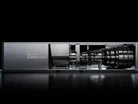
The Superpower turbine is a 42MW natural gas system that uses the same core technology as Boom’s Symphony jet engine, originally developed for sustained high power output under demanding thermal conditions.
This shared architecture allows the company to gather operational data from energy generation while progressing certification for its Overture supersonic aircraft.
Each unit delivers 42MW of ISO-rated power in a package roughly the size of a shipping container, enabling modular deployment across data centre sites.
The turbine maintains full output when temperatures exceed 110°F and operates without water, which matters considerably for facilities in hot or arid regions where water availability constrains conventional cooling approaches.
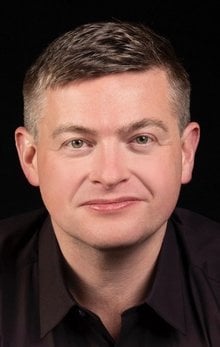
“Supersonic technology is an accelerant – of course for faster flight, but now for artificial intelligence as well,” says Blake Scholl, Founder and CEO of Boom Supersonic.
“With this financing and our first order for Superpower, Boom is funded to deliver both our engine and our airliner.”
The system can run on natural gas with backup diesel capability, supporting resilience for AI workloads that can’t tolerate power interruptions.
Boom argues that its use of advanced materials and supersonic design principles delivers stronger real-world performance compared with other aeroderivative engines used in data centre power generation.
How the Crusoe partnership addresses time-to-power challenge
Crusoe selected Superpower as part of what it describes as an energy-first approach to AI infrastructure.
On-site power generation using turbines offers a way to begin operations while grid connections are established, bypassing timelines that can stretch across multiple years in some markets.

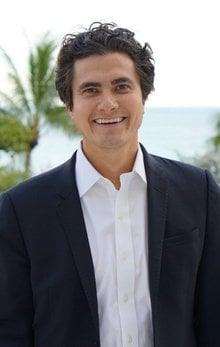
“Boom’s innovative approach to power turbine technology builds on the company’s impressive breakthroughs in supersonic flight,” says Chase Lochmiller, Co-founder and CEO of Crusoe.
“At Crusoe we are continuously searching for new approaches to increase real-world performance and accelerate time-to-power across our portfolio of energy assets and operations.”
Chase says Crusoe is “proud to be partnering closely with Boom as the launch customer for Superpower, an initiative that aligns perfectly with Crusoe’s energy-first approach to building the AI infrastructure of the future”.
The Series B funding fully covers Symphony engine development, while Superpower revenues are expected to support Overture aircraft certification and delivery. Darsana Capital describes this structure as a capital-efficient path into large-scale AI energy generation, reflecting growing investor interest in data centre power supply as a distinct market segment.
“Boom has assembled an incredible team and executed with impressive discipline,” says Steve Friedman, partner at Darsana Capital.
“Their focus on first delivering supersonic technology to create a high-performance power turbine business reflects a smart, capital-efficient path to building the next great American industrial company.”
Boom confirms that Superpower turbines will be manufactured in the US, with 95% of Symphony engine core prototype parts already in production and testing scheduled for 2026 at its Colorado facility.
Company portals

Executives
Blake Scholl
Founder/CEO
Chase Lochmiller
Co-Founder and Chief Executive Officer