
How Apple's US$600bn US Investment Helps AI Infrastructure

Apple's US manufacturing expansion signals a significant shift in its tech production strategy.
The company announced a US$100bn investment in the US, including the American Manufacturing Program, as it plans wider investment in the US totalling US$600bn over the next four years.
The investment comes as US President Donald Trump singled out Apple in 2025, threatening to raise tariffs on its products if it did not move iPhone manufacturing to the US, according to the BBC.

The expansion includes key operations in Houston and Kentucky.
Apple also began producing advanced AI servers in Houston for the first time, with these servers being deployed in Apple data centres across the US.
AI and machine learning investments
As part of Apple's US$600bn investment, the company plans to hire 20,000 people in the US, with the majority focused on R&D, silicon engineering, software development, AI and machine learning.
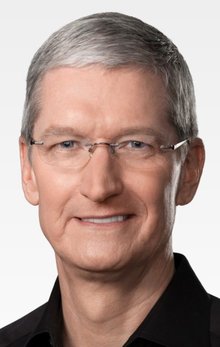
Tim Cook, Apple CEO, says: "This includes new and expanded work with 10 companies across America.
"They produce components that are used in Apple products sold all over the world, and we're grateful to the President for his support."
The expansion of factory operations in Houston, Texas, brings Mac mini production to the US through a new factory on Apple's Houston manufacturing site.
A 20,000 square foot advanced manufacturing centre is set to open in Houston in 2026, providing training in advanced manufacturing techniques to students, supplier employees and US businesses.
Tim says: "Apple is deeply committed to the future of American manufacturing, and we're proud to significantly expand our footprint in Houston with the production of the Mac mini starting later this year.
"We began shipping advanced AI servers from Houston ahead of schedule, and we're excited to accelerate that work even further."
Strengthening domestic supply chains
Apple expanded its US supply chain with a new commitment of US$500m with MP Materials, a rare earth producer in the United States.
With the multiple year deal, Apple committed to buying US made rare earth magnets.
Apple and MP Materials will work to establish a rare earth recycling line in California and develop novel magnet materials and innovative processing technologies to enhance magnet performance.
Apple also announced an expansion of its partnership with Corning to manufacture precision glass for Apple products.
This could mean that 100% of the cover glass on iPhone and Apple Watch units sold worldwide will be made in the US.
Advanced manufacturing
The significant expansion in Houston represents a strategic move for Apple's AI infrastructure development.
Servers assembled in Houston are used in Apple data centres around the US, supporting the company's growing AI capabilities and cloud computing requirements.
Tim says of the Kentucky expansion: "Thanks to the power of American manufacturing, any customer anywhere in the world who buys a new iPhone or Apple Watch will be holding precision glass made right here in Kentucky.
"We're grateful to the President and his administration for their support for American manufacturing and we're excited for the innovation this investment will unlock."
The shift towards US manufacturing could signal broader implications for the tech industry's supply chain strategy, particularly as companies balance geopolitical pressures with the need to maintain competitive production costs and access to advanced manufacturing capabilities for AI and machine learning hardware.
Company portals



Executives
Tim Cook
Executive Chairman