How AMD is Challenging Nvidia With a 6GW OpenAI Chip Pact

The battle for computing power has become the defining constraint in AI development – without one, there is not the other.
As companies across the world innovate to build ever-larger models, access to the specialised chips that train them has turned into a strategic priority.
Now AMD, the semiconductor manufacturer, has struck a partnership with OpenAI that will see the ChatGPT maker deploy 6 GW of AMD graphics processing units (GPUs) across multiple chip generations.
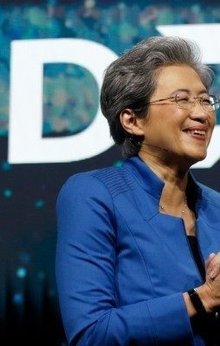
“We are thrilled to partner with OpenAI to deliver AI compute at massive scale,” says Dr Lisa Su, Chair and CEO of AMD.
“This partnership brings the best of AMD and OpenAI together to create a true win-win enabling the world’s most ambitious AI buildout and advancing the entire AI ecosystem.”
Inside AMD’s Instinct M1450 Series GPUs
The first 1GW of AMD’s Instinct MI450 Series GPUs will arrive in the second half of 2026, with deployments scaling up from there.
“Working alongside AMD will allow us to scale to deliver AI tools that benefit people everywhere.”
The deal is a big decision for OpenAI, which has relied almost entirely on Nvidia chips to train the models behind ChatGPT and its other AI products.
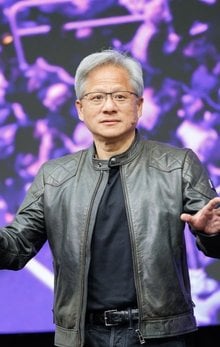
Nvidia has dominated the market for AI accelerators with an estimated 80 to 95% share, leaving customers with few alternatives when supply runs tight or prices climb.
Now the Instinct line competes directly with Nvidia’s H100 and H200 chips in data centres, where the processors train large language models (LLMs) and run inference workloads.
The fact that the gigawatt figure refers to the electrical power draw of the systems rather than counting individual chips – shows how important energy capacity has become as a silicon availability in AI infrastructure planning.
Why AMD issues a warrant for 160 million shares to OpenAI
To bind the two companies together, AMD is issuing OpenAI a warrant for up to 160 million shares of AMD common stock.
The warrant vests in tranches as OpenAI hits deployment milestones, starting with the initial 1GW installation and scaling up to the full 6GW commitment.
Vesting also depends on AMD hitting certain share-price targets and OpenAI meeting the technical and commercial milestones needed to make the deployments work at scale.
It’s an unusual structure that goes well beyond a standard supply contract.
Both sides have skin in the game, with OpenAI gaining potential equity upside in AMD while AMD secures a committed customer for multiple chip generations.
“This partnership is a major step in building the compute capacity needed to realise AI’s full potential,” says Sam Altman, Co-founder and CEO of OpenAI.
“AMD’s leadership in high-performance chips will enable us to accelerate progress and bring the benefits of advanced AI to everyone faster.”
How the partnership is expected to generate tens of billions in AMD revenue
The financial stakes are considerable – as Jean Hu, Executive Vice-President, Chief Financial Officer and Treasurer at AMD, says the partnership is “expected to deliver tens of billions of dollars in revenue for AMD while accelerating OpenAI’s AI infrastructure buildout”.
She adds that the agreement “creates significant strategic alignment and shareholder value for both AMD and OpenAI and is expected to be highly accretive to AMD’s non-GAAP earnings-per-share".

For AMD, landing OpenAI as a customer is validation after years of trying to crack Nvidia’s grip on the AI chip market.
The company released its MI300X chips in 2023 as an alternative for customers frustrated by Nvidia’s supply constraints or seeking to diversify their hardware suppliers.
This deal gives AMD visibility into revenue streams that stretch years into the future.
The partnership also involves technical collaboration that goes beyond a typical vendor relationship.
AMD and OpenAI will share expertise to optimise product roadmaps, with OpenAI’s software teams working to get the most out of AMD’s architecture while AMD designs chips that meet OpenAI’s specific needs for training and running models.
“Building the future of AI requires deep collaboration across every layer of the stack,” says Greg Brockman, Co-Founder and President of OpenAI.
“Working alongside AMD will allow us to scale to deliver AI tools that benefit people everywhere.”



Executives

Greg Brockman
President, Chairman, & Co-Founder
Jensen Huang
Founder and CEO
Lisa Su
Chair & CEO

Sam Altman