Google: How AI is Making Waves in Wildlife Conservation
The rapid rise of AI brings with it huge concerns about environmental impacts, but also a very science fiction kind of climate optimism.
While the idea that any one technology could be a panacea for the climate crisis is far-fetched, many people believe that AI could help to move the dial towards sustainability more than anything else in the global arsenal.
One area in which AI is already making waves is wildlife conservation. A recent report published by Google and the World Resources Institute (WRI) suggests that its potential in this area is growing by the day. For the study, Google and the WRI interviewed 22 people working at the nexus of AI and conservation and explored their experiences.

The research has helped the organisations to uncover a huge problem: fewer than 25% of countries currently have clear goals aligned with the Kunming-Montreal Global Biodiversity Framework, partly due to gaps in relevant data and information. Adopted in December 2022 at the UN Biodiversity Conference, the framework centres on halting and reversing global biodiversity loss by 2030.
For technology giants like Google, the hope is that AI can be part of the solution – from goal-setting to action-taking.
"From the air we breathe to the food we eat, a healthy planet matters to every single one of us," says Kate Brandt, Chief Sustainability Officer at Google. "For over 10 years, Google and the World Resources Institute have used the latest technology to protect our planet. But we need to do more, faster."
Applications show promise
The report points to a few initiatives that are already showcasing best practice when it comes to the use of AI in conservation work.
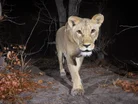
Wildlife Insights, an initiative developed by Google and a group of conservation organisations, has created the world's largest publicly accessible database of camera trap images – 253 million images of 4,292 species, across 112 countries
This library of photos documents the candid behaviour of flora and fauna in their natural habitats, meaning they can be studied with a great deal of accuracy.
Another initiative is the Global Fishing Watch, a project that uses AI to analyse the movement of ships. Through this programme, experts are able to identify potential illegal activity like fishing in protected areas.
In 2024, authorities in Chile used the platform to enforce the closure of some toothfish fisheries after spotting illegal activity at the sites. This led to fines for 21 vessels and, ultimately, improved levels of compliance.
Then there is the citizen science platform, iNaturalist, which allows anybody to document biodiversity with their mobile phones and share their observations.
The platform has built an online community of more than 400,000 identifiers and four million casual users over the years, who have, in total, contributed more than 100 million research-grade observations to the Global Biodiversity Information Facility.
"The report highlights real-world examples of people using this technology as we speak to protect and restore nature around the globe," says Kate.
"Governments using satellites to monitor the seas and prevent illegal fishing. Researchers using AI to help identify, map and protect endangered species. Indigenous communities equipped with real-time alerts to stop illicit logging on their land."
Three pillars for progress
The report identifies three critical areas requiring investment to realise AI's potential for nature conservation.
First, it calls for significant expansion of primary biodiversity data collection globally, alongside data infrastructure for open access sharing through initiatives such as the Global Biodiversity Information Facility.
Second, it emphasises developing open and transparent AI systems that can quickly fill critical information gaps in species and ecosystem monitoring, supporting better policy, enforcement and financing.
Third, it stresses capacity and knowledge sharing to ensure practitioners can benefit from existing AI capabilities and that developers incorporate feedback from those working in conservation.
"People spend a lot of time trying to sell models [but] models are only as good as the data," reflects Sara Beery, Assistant Professor of AI and Decision-Making at MIT.
"Data is never a bad investment, and data that can be open-sourced and have mutual and diverse downstream uses; that is the no-regret investment."
Addressing the risks of AI
The report acknowledges a number of risks that will have to be addressed in order for AI to benefit nature conservation effectively.
One big problem is that most AI expertise and infrastructure is currently concentrated in a small handful of countries, which could well deepen international inequalities and limit local ownership of conservation projects.
The environmental footprint of AI systems themselves presents another challenge. Data centres currently account for approximately 1.5% of global electricity use, which is projected to double by 2030 according to the International Energy Agency.
The report also highlights concerns about bias in training data, which could limit AI systems' ability to identify species in regions outside North America and Europe where most open-access observations originate."
Stephanie O'Donnell, Senior Technology Specialist at the World Bank's Global Wildlife Program, says: "Finding the right people and helping them collaborate, build capacity to problem solve and work together is way more important than the technology applications."
The report estimates that global financing for nature needs to increase by US$500bn a year to achieve the world's goals on nature and climate, as laid out in the SDGs and the Kunming-Montreal Global Biodiversity Framework.
It is clear, however, that everyone must be on board to build momentum. As Kate says: "Partnership is key to meeting this opportunity."
Company portals

Executives
Kate Brandt
Member Board of Trustees