Gen AI: The Battle for Innovation, Ethics and Authenticity

Gen AI has burst into the world over the last few years and created things we did not think were possible.
It includes showing you what you could look like riding a unicorn across the moon and weaving itself into the fabric of enterprise operations worldwide.
Yet the commercialisation of Gen AI is raising questions and anxieties about authenticity, consent and human creativity that society has barely begun to address.
The technology’s origins were in 2014, when researcher Ian Goodfellow was debating machine learning (ML) over drinks with colleagues in a Montreal pub – and he cracked the code for Generative Adversarial Networks (GANs).
His breakthrough – pitting two neural networks against each other to generate increasingly convincing synthetic images – sparked a new genre of AI.

What started as blurry, pixelated faces has evolved into systems producing photorealistic video, synthesising convincing audio and creating digital humans virtually indistinguishable from real people.
These models now touch nearly every sector, trained on vast datasets of human creativity and promising efficiency gains.
But the problem is, the same technology that helps businesses slash costs can also create realistic incriminating videos, bring people visually back from the dead and be used for malicious intent.
Some workers are watching their roles automated away, actors are seeing their likenesses copied without permission – and this debate has burst out of Silicon Valley conference rooms to courtrooms, union negotiations and increasingly heated social media posts from those directly affected.
OpenAI’s Sora 2: When physics meets generation
OpenAI’s release of Sora 2 is a huge leap in what the company calls world simulation technology.
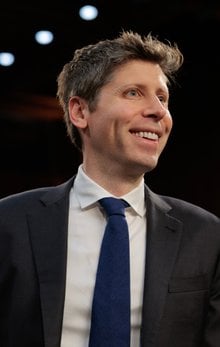
CEO Sam Altman says in the app's announcing video: “One year ago, Sora 1 redefined what was possible with moving images.
“Today, we’re announcing the Sora app, powered by the all new Sora 2. It’s the most powerful imagination engine ever built – and it’s packed with new features.”
Unlike earlier video generation models that would bend reality to match text prompts, Sora 2 attempts to understand and respect physics.
“Now every video comes with sound. Sora 2 is also the state of the art for motion, physics IQ and body mechanics – marking a giant leap forward in realism,” says Bill Peebles, Head of Sora at OpenAI.
“Prior video models are overoptimistic – they will morph objects and deform reality to successfully execute upon a text prompt,” the OpenAI Sora team explains.
“For example, if a basketball player misses a shot, the ball may spontaneously teleport to the hoop. In Sora 2, if a basketball player misses a shot, it will rebound off the backboard.”
It seems like a small detail, but it represents something much bigger – these systems are learning how the world works, not just how it looks.
The model generates video across styles from photorealistic to anime, creates synchronised audio including speech and sound effects and maintains consistency across multiple shots.
The standout feature is “cameos”, which lets users insert recordings of themselves into generated environments.
Users control their digital likeness through permission settings – “only you decide who can use your cameo and you can revoke access or remove any video that includes it at any time,” the team says.
OpenAI embeds visible watermarks and C2PA metadata in every video alongside internal tracing tools.
The platform also restricts mature content, blocks adults from initiating teen contact and reviews generated audio for policy violations.
“Video models are getting very good, very quickly,” the team says.
The economic pressure of Gen AI
Nearly three-quarters of UK employers have already introduced AI into tasks once performed by humans, according to Channel 4 research.
The commercial logic is straightforward – these systems promise significant cost reductions with capabilities that improve weekly.
This is the tension and reality rolling out across workforces.
Marketing departments are weighing cost savings against potential backlash. Customer service operations are debating whether to disclose that callers are speaking with synthetic voices. Social media companies are implementing inconsistent labelling policies while detection systems lag behind generation capabilities.
Meanwhile, regulation is struggling to keep pace. The EU’s AI Act requires disclosure of synthetic media in certain contexts, but implementation details remain fuzzy.
Some US states are introducing personality rights legislation, yet enforcement is patchy. China mandates watermarking, though compliance mechanisms are still developing. No global standard exists.
“It’s freely available to someone with very little technical skill to copy a voice, image or even a video,” Rob Greig, Arup’s Chief Information Officer (CIO), tells the World Economic Forum (WEF).
That accessibility creates particular problems when synthetic content involves deceased individuals who cannot possibly grant permission.
How Gen AI can jeopardise its purpose to serve humans
Zelda Williams knows this reality intimately.
The film director and daughter of actor Robin Williams, who died in 2014, has repeatedly asked people to stop creating and sharing AI-generated videos of her father.
“Please, just stop sending me AI videos of Dad. Stop believing I wanna see it or that I’ll understand, I don’t and I won’t,” she writes on Instagram.
“To watch the legacies of real people be condensed down to ‘this vaguely looks and sounds like them so that’s enough’, just so other people can churn out TikTok slop puppeteering them is maddening.”
The controversy intensifies with Tilly Norwood, marketed as an “AI actor” by creator Eline Van der Velden, who tells media she wants the synthetic character to become the “next Scarlett Johansson”.
SAG-Aftra rejects the premise entirely: “It’s not an actor, it’s a character generated by a computer program that was trained on the work of countless professional performers,” it says.
“It has no life experience to draw from, no emotion and from what we’ve seen, audiences aren’t interested in watching computer-generated content untethered from the human experience.”
Actress Emily Blunt captures the fear many actors share: “Please stop taking away our human connection."
Inside the deception experiment
Channel 4 recently tested how convincing these Gen AI systems have become by deploying an AI-generated presenter throughout an entire documentary.
Viewers watching Will AI Take My Job? Dispatches spent an hour following what appeared to be a human presenter investigating workplace automation before the final reveal.
“AI is going to touch everybody’s lives in the next few years. And for some, it will take their jobs,” the AI presenter tells viewers, before delivering the twist: “Because I’m not real. In a British TV first, I’m an AI presenter.”
Nick Parnes, CEO of Kalel Productions, says: “This is another risky, yet compelling, project for Kalel. It’s been nail-biting to create the AI presenter in time.
“Ironically, it gets even more economical to go with an AI Presenter over human, weekly. And as the generative AI tech keeps bettering itself, the Presenter gets more and more convincing, daily. That’s good for our film, but maybe not so good for people’s careers.”
Louisa Compton, Head of News and Current Affairs at Channel 4, says: “The use of an AI presenter is not something we will be making a habit of at Channel 4 – instead our focus in news and current affairs is on premium, fact checked, duly impartial and trusted journalism – something AI is not capable of doing.”
The question isn’t whether Gen AI can convincingly replicate human creativity – it already can.
The question is whether society can establish frameworks for consent, transparency and accountability before economic pressures overwhelm the ethical considerations that should govern deployment.
Right now, that race seems close.