
Could Bumble’s Bee AI End 'Swiping Fatigue' on Dating Apps?

Last year, a survey by Forbes revealed that 78% of singletons were experiencing "burnout" with dating apps. In recent years, this has translated to lulls in users across the big apps.
In an effort to keep people engaged, many services have started to incorporate new technologies into their apps.
Bumble is the latest to do so. The company has officially launched an AI-powered assistant that can act as an "AI wingman" and matchmaker.
The dating platform’s Bee AI agent is also set to drive user growth in a pilot programme that could start a seismic shift in online dating as revenue dips and Gen Z’s disinterest in swipes continues.
The mechanics behind the matchmaker
So, how does Bee work?
Bee engages users in private onboarding chats to assess values, relationship goals, communication style, lifestyle and dating intentions, which it takes to suggest compatible matches with summaries explaining alignments, allowing users to control shared details.

To do so, it operated as a custom-built AI model – distinct from generic chatbots – integrating natural language processing (NLP) for deep user profiling during private onboarding conversations.
It then analyses inputs on values, relationship goals, communication styles, lifestyle preferences and dating intentions to construct semantic user embeddings – vector representations capturing nuanced compatibility beyond surface traits like photos or bios.
The system’s matching engine employs machine learning algorithms to compute similarity scores between embeddings, notifying users only when alignments exceed thresholds.
This means that, at the end of the day, users retain granular control – they can select which conversation-derived insights are disclosed, ensuring privacy via on-device processing or federated learning to minimise server-side data retention.
Bumble is soon launching a test for an AI dating experience called Dates.
Doing what it says on the tin, Dates – powered by Bee – notifies matched pairs without generating messages or public profile shares.
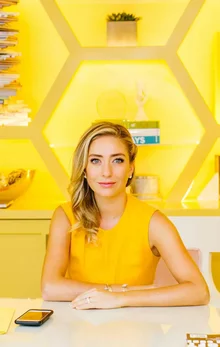
Bumble’s Founder and CEO Whitney Wolfe Herd says the aim of Dates is to “remove some of the emotional friction that really sits between matching and meeting”.
She adds: “We don't see AI as a gimmick layer on top of swiping. It really needs to be an infrastructure for better relationships.
“It should not just be a chatbot layered on top of something.”
The business impact
Bee was announced during Bumble’s Q4 2025 earnings, anchoring the launch of what they’re calling Bumble 2.0.
In the same call, Bumble’s revenue was announced to have hit US$224.2m, down 14.5% year-on-year but above estimates, with paying users at 3.3 million and average revenue per paying user (ARPPU) up 7.9% to US$22.20.
As a result, shares have surged more than 40% following the announcement, rebounding from prior losses.
Ethical data handling at Bee’s core
Bumble prioritises user privacy in Bee’s design, ensuring all onboarding conversations remain strictly private and never shared on public profiles.
Users exercise explicit control over data disclosure, selecting which derived insights – such as shared values or lifestyle preferences – are revealed to potential matches, aligning with GDPR and emerging AI ethics standards.
As the system employs ephemeral data processing – where chat inputs generate temporary semantic embeddings for matching without persistent server storage – breach risks are significantly reduced.
“We are rearchitecting the entire Bumble experience from start to finish,” Whitney adds, talking about how AI is being used widely across Bumble’s operations.
“Daters across the industry are dissatisfied with being reduced to images and potentially dismissed with a swipe.
“Bumble 2.0 introduces a chapter-based structure designed to help members tell their stories more authentically and understand one another more deeply.”
Company portals

Executives
Whitney Wolfe Herd
Founder and CEO