How AI Could Slash Global Emissions by 5.4 Gigatonnes
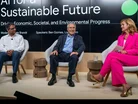
In a study titled, Green and intelligent: the role of AI in the climate transition, Stern et al, AI’s potential is highlighted to reduce global emissions by 5.4 Giga tonnes CO₂e annually by 2035, particularly through advancements in the power, food and mobility sectors.
These AI applications present a net-positive impact on climate change, even when considering the increased energy demands of data centers driven by AI deployment.
As environmental pressures intensify worldwide, the research argues that AI is not a threat but a vital tool for creating efficiencies, catalysing innovation, and fostering sustainable economic growth in both developed and emerging markets.
AI Innovations across energy, cities and transportation
AI transforms the way complex and large-scale systems are managed and optimised, especially in energy, urban environments and transportation networks.

Its ability to predict and balance supply and demand has shown promise in addressing the grid instability caused by the intermittent nature of renewable energy sources like wind and solar.
The National AI Strategy of Singapore and Google DeepMind’s wind optimisation tool, which increased wind energy value by 20%, exemplify AI’s effectiveness in this arena.
Furthermore, AI’s capabilities can aid sustainable investments in emerging markets by bridging information gaps and predicting risks.
“The paper discusses the ways AI can play a powerful role in supporting climate action while boosting sustainable and inclusive economic growth,” says Kate Brandt, Chief Sustainability Officer at Google, on LinkedIn.
“Lord Stern spoke about three key sectors, power, food and mobility, which collectively contribute nearly half of global emissions and the ways AI can reduce their emissions.”
By analysing diverse data sources, AI enhances risk assessment capabilities, which optimises capital flow towards more effective climate solutions.
Improving resource efficiency through AI
Many of the technologies necessary to achieve emissions reductions by 2050 are still in development and AI is speeding up this progress.
Tools like DeepMind’s GNoME have identified 2 million new materials potentially transformative for renewable energy storage.
Additionally, in the industrial sector, AI innovations like Amazon’s AI-driven packaging optimisation have saved over 3 million tonnes of material since 2015, while startups such as GreyParrot use computer vision technology to drastically improve recycling rates.
Such advancements not only boost productivity but also contribute to enhanced circularity and sustainability along the value chains.
AI’s influence on consumer behavior towards greener choices
AI facilitates emissions reduction by directly influencing consumer behaviors towards sustainable practices.
Smart tech solutions such as Google Nest and Oracle Opower utilise real-time data combined with behavioral science to enable users in cutting down their energy consumption.
In the food sector, AI-powered cameras by Winnow Vision help more than 3,000 kitchens cut food waste by identifying waste patterns proactively.
Furthermore, AI offers personalised, low-impact options – Google Maps’ fuel-efficient route guidance being a prime example – empowering users to make informed decisions that align with sustainability goals.
Such tools are crucial in modifying consumption patterns to support long-term climate strategies.
Advancements in climate modelling and resilience planning
Accurate climate modeling remains an essential component for policy development and AI-enhanced models outperform traditional systems in several areas.

For example, IceNet outpaces conventional forecasting techniques in predicting Arctic sea ice and Climate Policy Radar harnesses AI to support governments in designing superior climate policies through analysis of numerous case studies.
AI strengthens resilience initiatives by enhancing early warning systems.
Google’s FloodHub forecasts floods up to five days in advance across 80 countries, averting potential economic damages that could tally into billions.
Meanwhile, solutions like Nvidia’s Earth-2 digital twins are redefining how we simulate extreme weather events and ecological shifts over time.