
Cognizant Adds Roles for AI Era Workforce Strategy

Cognizant has created two new job categories as businesses reconsider how employees work in an AI era. The company says the roles have been purpose built for the technology's deployment at scale.
The Frontier Certified Engineer and Frontier Business Operator positions follow the launch of the company's AI Builder Strategy. That approach centres on developing custom AI platforms rather than off the shelf tools.
According to research from Cognizant, a gap of US$4.5tn exists between what AI could deliver and what enterprises are currently achieving. The company attributes this to shortages in both personnel and processes that can deploy the technology in ways that produce measurable returns.
Kathy Diaz, Chief Human Resources Officer of Cognizant, says the company is taking a deliberate approach to workforce development. "We are making a deliberate bet on the next generation," she says. "Frontier Certified Engineers and Frontier Business Operators are roles that are being designed from scratch and at scale for the world we are in now."
Rethinking business processes with AI
The new roles aim to reframe how work functions when AI tools are involved. Frontier Engineers will work with client organisations to realign their business processes for environments where AI is active.
Frontier Certified Engineers will focus on rethinking workflows. The role involves identifying where automation could reshape operations or reduce inefficiencies. Cognizant says the position requires both strategic thinking and technical fluency.
Frontier Business Operators will take ownership of operational results. They will manage teams that include both human staff and digital systems.
This could include deploying AI agents and automation tools alongside human decision making. Cognizant says the aim is to help organisations achieve specific business outcomes by combining these resources.
Addressing talent and process gaps
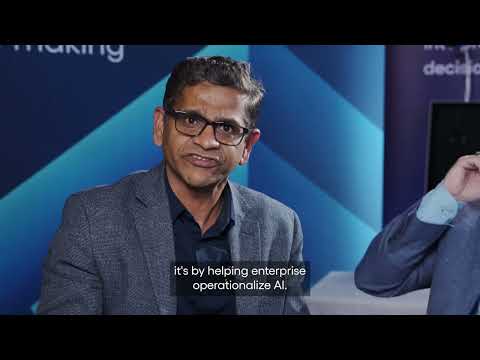
Thirumala Arohi, Senior Vice President and Head of Learning and Development at Cognizant, says businesses are questioning why returns from AI have not materialised. "The question every enterprise is asking is why AI results aren't showing up yet," he says. "The answer is talent and process. AI has exposed 93% of jobs to automation, yet the US$4.5tn in labour value that represents remains uncaptured."
Thirumala attributes this to existing workforce structures. "The reason is not the technology; it is the workforce architecture. The pyramid was built for a pre-AI world," he says.
He says the new roles represent a different type of worker. "Frontier Certified Engineers who design for agentic outcomes and the Frontier Business Operators who own them are a new kind of professional, trained from day one to turn AI capability into business reality," he says.
Thirumala says the focus on workforce design could matter more than the technology itself. "The most important innovation of this decade will not come from AI. It will come from empowering every worker to use it," he says.
Deploying SkillSpring for training
Cognizant will use its SkillSpring platform to train employees in the new roles. The company describes the learning platform as central to the rollout.
Both talent tracks will undergo structured learning paths. These will cover AI fluency, process design, data interpretation and operational leadership.
The platform is designed to reduce the time it takes new hires to reach full productivity. Cognizant says this will allow it to scale the roles at faster rates.
Kathy says the platform provides the company with a tool for developing staff who can work in AI environments. "SkillSpring gives us the ability to rapidly develop associates who can lead in an AI-first environment," she says. "This is how we build a workforce that isn't just ready for what's next but is actively shaping it."
Company portals

Executives

Kathy Diaz
Chief Human Resources Officer

Thirumala Arohi
Senior Vice President and Head of Learning and Development