What CloudFlare's Layoffs Say About its AI Strategy

Across the technology sector, organisations are reconfiguring workforces and management layers as AI advances and changes how value is created.
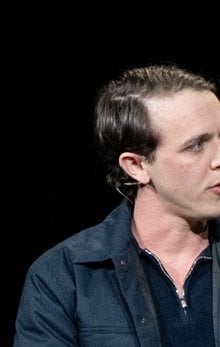
Matthew Prince, CEO at Cloudflare, explains the company’s decision to reduce its workforce by around 20% as a strategic reset for the “agentic AI era”.
In an op-ed in the Wall Street Journal, he positions the move as operational redefinition rather than cost cutting, saying that the vast majority of affected roles are what he calls “measurers”. He defines these as people in middle management or in finance, legal and internal audit functions.
Cloudflare describes the objective as building a world-class, high-growth organisation in which teams are closer to customers and product. The company frames the changes as clarifying how it operates and creates value as AI accelerates.
The reorganisation signals where Cloudflare believes human strengths remain most durable, and where AI systems are beginning to assume routine measurement and reporting work.

Trimming layers and prioritising builders
As Cloudflare removes layers of management, Matthew says the business is retaining and hiring “builders” such as engineers and “sellers”. He views these roles as less vulnerable to near-term AI displacement.
He notes that Cloudflare continues to have open positions “in areas that drive growth”. The hiring focus is intended to rebalance headcount toward product development and revenue generation.
Leadership emphasises that restructuring is not solely about fewer roles. It is about simplifying decision-making and empowering contributors who build, ship and sell.
The approach aims to speed execution, reduce handoffs and ensure managers operate as contributors who amplify teams rather than as pure overseers.
Industry experiments with flatter structures
Other technology companies are also simplifying structures. Brian Armstrong, CEO at Coinbase, tells employees in an email that the company is “fundamentally changing” its organisation so there are five layers below the Chief Executive Officer.
Brian argues this ensures everyone is a direct contributor: “Managers should be like player-coaches, getting their hands dirty alongside their teams.”
Ryan Breslow, CEO at Bolt, tells the Fortune Workforce Innovation Summit that Bolt reduced organisational layers and eliminated its entire HR department to regain a startup-style model.
Ryan adds that context matters for HR’s role: “We are back in startup mode again, and those HR professionals have really important insights when you are in a peacetime and when you are at a larger company.”
How AI is reshaping white-collar work
Matthew argues that AI is increasingly capable of measurement and oversight tasks that once required large management layers.
He writes: “Tireless, independent, efficient and available, AI systems can now measure an organisation with a level of objective detail and precision that was previously impossible even for the best employees.”
Market data points to the same shift. Challenger, Gray & Christmas reports that AI was a leading cause of US job cuts in March and April 2024.
Amrita Ahuja, Chief Financial Officer and Chief Operating Officer at Block, describes the impact in stark terms at the WSJ CEO Council Summit.
Following workforce reductions of around 40% in February 2024, she says: “It feels like the acceleration is actually only quickening and we are seeing, really, an inevitability at this point around productivity gains and what that means for us as a business.”
Asked whether other companies will follow, Amrita adds: “I think it is an inevitability. As a CFO, I think it is better to be a little bit early than to be too late here.”
Across the sector, leadership teams are reorganising for speed and direct contribution. Cloudflare’s pivot underscores a broader bet: AI will absorb more measurement and managerial overhead, while people concentrate on building products and driving growth.
Company portals




Executives

Amrita Ahuja
Chief Operating Officer and Chief Financial Officer
Brian Armstrong
CEO
Matthew Prince
CEO & Co-Founder
Ryan Breslow
Founder & CEO