Capgemini: Is AI Damaging the Credibility of Climate Action?

Climate action credibility is coming under strain, according to new findings from Capgemini.
Despite rising investment levels and sustainability being recognised as a driver of strategic value, implementation of climate adaptation measures is falling behind and concerns are emerging about AI's environmental impact.
The Capgemini report, A world in balance 2025: Unlocking resilience and long-term value through environmental action, is based on perspectives from more than 2,000 senior executives representing 716 major organisations and 6,566 consumers.
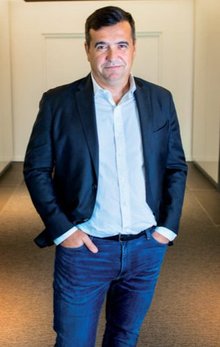
Commenting on LinkedIn, Cyril Garcia, Head of Sustainability and Corporate Responsibility at Capgemini, states: "Sustainability is no longer a side conversation. It's becoming central to business strategy, resilience and long-term value."
The findings of the report
Approximately two-thirds of the executives polled by Capgemini indicated that they are under pressure to demonstrate credible, science-based progression towards their net zero targets.
Consumer perceptions of greenwashing amongst organisations have risen from 33% in 2023 to 62% currently.
Merely 21% of organisations have created comprehensive transition plans featuring interim targets and capital allocation strategies.
A majority of organisations, representing 82%, aim to achieve net zero by 2041 or later.
The report reveals that 82% of organisations intend to boost their environmental sustainability investment within the coming 12-18 months.
This represents a rise from 64% in 2024.
Among surveyed organisations, 66% treat sustainability as an essential criterion in business investment decisions, whilst 59% of executives recognise a strong business case for sustainability.
Only 22% believed that sustainability initiatives cost more than they deliver in benefits.

Net zero timelines have remained unchanged for nearly all organisations, at 92%.
Despite strong intentions, advancement may be decelerating.
Organisations classified as sustainability front-runners now stand at just 1%, down from 7% in 2024.
According to the report, 65% of executives cite geopolitical tensions as factors slowing initiatives, along with budget constraints, operational silos and insufficient data and measurement systems.
AI's role in sustainability
The report shows that 64% of executives indicate their organisation employs AI to support its sustainability agenda.
Nevertheless, the proportion of executives stating their organisation utilises generative AI (Gen AI) for sustainability purposes has fallen from 65% in 2024 to 52% in 2025.
More than half of executives indicate that Gen AI's sustainability impact features in board-level discussions.
"The use of agentic AI to advance sustainability goals is still in its early stages, with 29% of executives saying their organisation uses or plans to use agentic AI/AI agents for sustainability," the report reads.
In contrast to more conventional AI or Gen AI applications, agentic AI has the potential to manage and execute end-to-end processes rather than merely predefined tasks.
Chief Sustainability Officer strategy
At Sustainability LIVE Chicago 2025, Miguel Sossa-Mardomingo, Vice President, Deputy Americas Sustainability Lead at Capgemini, participated in The CSO Strategy Forum.
The panel discussed how sustainability must be reframed in terms of growth, profit and business risk, rather than being regarded as a secondary initiative.
Panellists encouraged sustainability leaders to take bold action rather than waiting for perfect data or ideal conditions.
At the event, Sol Salinas, Executive Vice President, Sustainability Lead for the Americas at Capgemini, shared insights with Sustainability Magazine.
"As we do our work at Capgemini, we recognise that increasingly we have to engage multiple functions within the enterprise," he says.
"The Chief Sustainability Officer role is one that is a convening role in many ways and they have to rely very heavily on their colleagues, whether it's in procurement, supply chain, IT, HR, marketing or others."
Sol advises: "The more that we as sustainability practitioners engage with our colleagues in other parts of the enterprise, the better off we'll be and the more likely we are to succeed."
Register your interest for Sustainability LIVE Chicago 2026 here.
Company portals

Executives
Cyril Garcia
Executive Board Member, Head of Sustainability and Corporate Responsibility
Miguel Sossa-Mardomingo
Vice President - Deputy Americas Sustainability Lead

Sol Salinas
Executive Vice President - Sustainability Lead for the Americas