
Capgemini: AI Turns Corporate Sustainability into Action

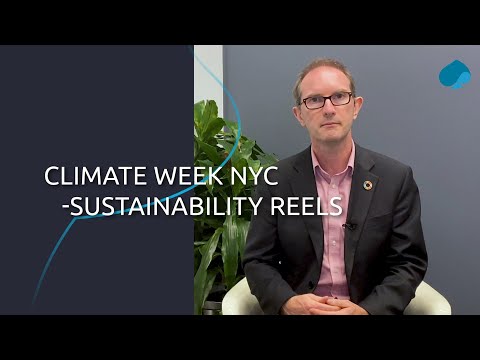
According to Dr James Robey, Executive Vice President, Global Head of Environmental Sustainability at Capgemini, organisations need to accelerate implementation, turning net zero and environmental, social and governance (ESG) ambitions into measurable, scalable outcomes.
Regulatory expectations are rising, climate impacts are becoming more visible and technology is evolving at a pace.
As companies embrace ESG and corporate responsibility, sustainability is expanding well beyond carbon alone.
James highlights that frameworks such as the Taskforce on Nature-related Financial Disclosures are pushing companies to understand their dependencies on nature, assess biodiversity risks and develop credible mitigation strategies.
At the same time, ESG reporting is entering a new phase.
Regulations like the Central Securities Depositories Regulation in Europe, emerging climate disclosure rules in the US and frameworks in Australia and New Zealand are making reporting more standardised, comparable and actionable.
"The sustainability conversation is changing," James writes on LinkedIn.
"For the past decade, the focus has been on commitments and targets. Now, the real test is delivery."
AI moves beyond experimentation
The role of AI in sustainability is moving beyond experimentation, according to James.
While Gen AI may support early-stage reporting drafts, the most meaningful progress will come from operational applications: digital twins, energy-efficiency algorithms, predictive maintenance and large-scale analytics.
The shift towards practical gen AI deployment represents a fundamental change in how organisations approach environmental challenges.
These applications enable real-time monitoring of energy consumption, predict equipment failures before they occur and optimise resource allocation across complex supply chains.
According to joint research by the Carbon Disclosure Project (CDP) and Capgemini, Scope 3 emissions represent 92% of emissions disclosed but only 37% are currently being addressed.
This gap highlights where AI-driven solutions could prove particularly valuable, enabling companies to track and manage emissions across their entire value chain with greater accuracy.
AI-powered systems are also helping organisations identify inefficiencies in their operations that were previously invisible, creating opportunities for both environmental improvement and cost reduction.
Data quality drives credible reporting
For James, improving reporting capability is now a strategic priority.
"We must move away from spend‑based proxy models for Scope 3 towards more robust, standardised and comparable data, underpinned by credible transition plans," he writes.
AI technologies are proving instrumental in addressing this challenge.
Machine learning algorithms can process vast quantities of data from multiple sources, identifying patterns and anomalies that would be impossible for human analysts to detect manually.
This capability enables organisations to move beyond approximations and develop precise, auditable emissions inventories.
James highlights that according to Capgemini research, the majority of organisations plan to increase environmental sustainability investment in 2025, with more than 90% maintaining net zero timelines despite economic or geopolitical volatility.
The integration of AI into reporting systems is also improving the speed and reliability of disclosure processes, enabling companies to meet increasingly stringent regulatory deadlines.

Resilience through intelligent systems
As climate impacts grow in frequency and severity, adaptation is becoming central to business planning.
Companies are increasingly aware of physical risks, from supply-chain disruptions to asset vulnerability, and are embedding resilience into operations and long-term strategy.
AI-powered predictive analytics are enabling organisations to anticipate and respond to climate-related risks with unprecedented sophistication.
Digital twin technology creates virtual replicas of physical assets and systems, allowing companies to simulate various climate scenarios and test resilience strategies before implementing them in the real world.
Green markets are continuing to expand, encompassing sustainable finance, circular business models and low-carbon technologies such as electrification, regenerative agriculture and renewable energy deployment.
Rapid innovation in areas like sustainable IT and carbon tech solutions suggests that credible decarbonisation and resilience solutions will continue to drive market growth.
Those that combine credible reporting, nature-positive initiatives, practical AI deployment and integrated adaptation strategies will be best positioned to deliver measurable outcomes.
The next phase must be defined by execution rather than aspiration, with AI serving as a critical enabler of this transformation.
Company portals

Executives

Dr James Robey
Global Head of Sustainability