BMW iX3 Establishes New Benchmark for In-Vehicle AI
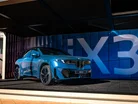
BMW is positioning artificial intelligence at the centre of its next-generation vehicle experience, unveiling an enhanced Intelligent Personal Assistant powered by generative AI technology.
The system, which integrates Amazon Alexa+ capabilities, represents a significant shift in how drivers interact with their vehicles through natural language processing.
The AI-powered assistant will debut in the fully-electric BMW iX3, the inaugural model for the Neue Klasse platform. BMW says the technology will be integrated across 40 new models and updates throughout the second half of 2026, initially launching in Germany and the US.
The automotive manufacturer has become the first to expand its voice assistant with Amazon's AI assistant Alexa+, potentially establishing a new benchmark for in-vehicle artificial intelligence systems across the industry.

Large language models enable natural dialogue
The foundation of BMW's Intelligent Personal Assistant is a large language model (LLM), a form of generative AI that understands language and formulates independent responses.
This marks a departure from traditional voice command systems, which typically require specific phrases and struggle with complex requests.
According to BMW, passengers can ask multiple questions in a single sentence, covering both vehicle features and general knowledge topics. The system enables what the company describes as "intuitive and intelligent interaction" through natural dialogue, rather than rigid command structures.
The LLM technology processes requests that extend beyond standard vehicle functions, providing access to information and knowledge that exists outside the car's immediate operational parameters. BMW says this means drivers can ask about weather conditions, restaurant recommendations and vehicle diagnostics within the same conversation flow.
All BMW models equipped with BMW Operating System 9 and BMW Operating System X will receive the AI assistant rollout during the second half of 2026, suggesting a substantial deployment of generative AI capabilities across the manufacturer's fleet.
AI integration supports expanded digital ecosystem
The AI capabilities extend into the broader digital experience within the BMW iX3. When stationary, the BMW Operating System X enables users to stream films, play video games or make video calls through the central display.
The iX3 provides access to Disney+ and the Video App powered by TiVo, which delivers news, live and on-demand streaming content. BMW indicates the video streaming platform portfolio will continue to evolve, while the ConnectedDrive Store will soon include YouTube Music for the first time.
Zoom integration allows video calls on the central display, with the AI system intelligently managing the transition between video and audio as the vehicle begins moving. As soon as the car starts, video transmission stops and conversations continue via audio only.
The integration of these entertainment and communication features demonstrates BMW's approach to creating a comprehensive digital ecosystem within the vehicle environment.

Sixth-generation eDrive technology powers AI systems
The advanced AI features are supported by BMW's sixth-generation eDrive technology, developed specifically for the Neue Klasse platform.
The system includes new high-voltage batteries with cylindrical cells and 800 V technology, which provides the electrical architecture necessary for computationally intensive AI processing.
The iX3 50 xDrive features two electric motors generating output of 345 kW / 469 hp and 645 Nm (475 lb-ft) of torque. According to BMW, the drive technology reduces energy loss by 40% compared to fifth-generation eDrive technology, weight by 10% and manufacturing costs by 20%.
The high-voltage battery concept achieves 20% higher energy density on a cell level than previous generation technology and enables a 30% increase in charging speed. The cylindrical cells integrate directly into the battery, benefiting energy density and cost efficiency through a 'pack to open body' design that positions the battery as a structural component.
With a usable energy content of 108.7 kWh, the system enables a range of up to 805 km (500 miles) in the WLTP cycle. A maximum charging rate of 400 kW allows users to add up to 372 km (231 miles) of range in 10 minutes at an 800 V direct current rapid charging station, while charging from 10 to 80% capacity takes 21 minutes.