Is there an AI Disconnect Between Education and Work?

The AI skills gap between higher education and the workplace has reached a critical point, according to new research that could have significant implications for enterprise AI adoption strategies.
AWS and Pearson's report, AI Readiness: Building the Bridge from Higher Education to Work, finds very few graduates feel they have developed the AI skills to succeed in the workplace.
Drawing on more than 2,700 survey responses from learners, higher education leaders and employers across six countries, researchers discovered that just 14% of graduates say they have achieved a high level of proficiency in applying AI tools in the workplace.More than half of employers also report that their main challenge when hiring is finding graduates with the right AI skills.
As the use of AI accelerates in the workplace, this disconnect between higher education and the working world could slow successful AI adoption – making it more challenging for businesses to see a return on their technology investments.

Universities struggle with AI transformation pace
Pearson and AWS find that, while 67% of respondents say that AI-driven workplace change is extremely or very fast, only 28% of employers believe universities are keeping up with these changes.
This gap makes it more challenging for entry-level workers to develop AI readiness – the human capability to work alongside intelligent systems with a combination of technical proficiency and critical thinking skills.
Developing the skills to succeed in an AI-enabled workplace is particularly important for entry-level workers as AI makes rapid changes to the way these roles operate, with research from the King's Trust finding that 55% of jobs currently held by young people are likely to change due to AI.
The AI readiness gap presents particular challenges for organisations attempting to scale AI implementation across their workforce. Without adequately trained entry-level talent, companies could face extended training periods and slower adoption rates, potentially delaying the productivity gains promised by AI investments.
Shifting focus from degrees to AI proficiency
As AI makes these significant changes to the workplace, some organisations are reconsidering traditional hiring requirements in favour of demonstrable AI capabilities.
A quarter of employees said they planned to remove bachelor's degree requirements for some roles, according to research from Resume Templates, while companies such as IBM and Google have already begun to focus more on skills-first hiring by focusing on candidate proficiency over degrees.
Alex Karp, CEO of Palantir, is a particular advocate for this approach to hiring, revealing at the World Economic Forum in Davos that he struggled to find work after completing a PhD in Philosophy and suggests that non-specific knowledge risks leaving candidates behind.
However, some believe that the skills developed in a university environment can still help employees succeed in AI-enabled workplaces – such as Daniela Amodei, President and Co-Founder of Anthropic.
She told ABC News: "I actually think studying the humanities is going to be more important than ever. A lot of these models are actually very good at STEM.
"But I think this idea that there are things that make us uniquely human – understanding ourselves, understanding history, understanding what makes us tick – I think that will always be really, really important.
"And I think the ability to have critical thinking skills and learn how to interact with other people will be more important in the future, rather than less."
Bridging the AI-readiness divide
To create an education system that can better prepare students for AI-enabled workplaces, Pearson and AWS say universities and employers need to be better aligned – with students currently lacking access to structured opportunities to practice and apply AI tools.
Their report recommends that employers clearly communicate their workforce needs and co-design learning with their educational partnerships to help students develop AI skills and feel confident using the technology responsibly.
This approach could prove critical for organisations seeking to accelerate AI adoption while building internal capabilities for long-term AI implementation success.
Tom ap Simon, President of Higher Education and Virtual Learning at Pearson, says the schools that who lead in AI readiness "will shape the future of workforce readiness".
He adds: "Building an AI-ready workforce depends on structured, shared systems that amplify human skills and connect curriculum to real work."
The findings suggest that addressing the AI skills gap requires a fundamental rethinking of how educational institutions and employers collaborate on AI training, with implications for both short-term hiring strategies and long-term workforce development plans.
Company portals




Executives
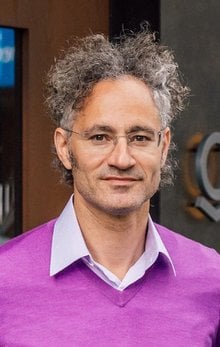
Alex Karp
CEO
Daniela Amodei
President and co-founder