
How Amazon’s AI Glasses Power Smart Deliveries

Amazon is embracing AI glasses for faster, safer deliveries.
The new prototype “Amelia” smart delivery glasses can identify hazards, seamlessly navigate to customers’ doorsteps and enhance overall delivery accuracy and efficiency.
Delivery Associates can use these glasses to navigate directly to the correct address, and perform activities such as scan packages and capture proof of deliveries, all hands-free, without needing a separate device.
“We’re testing it at a number of locations with over a dozen delivery service partners and hundreds of drivers across the country,” says Beryl Tomay, Amazon's Vice President of Transportation.
“The computer vision and AI-powered glasses act as a smart companion for drivers, displaying real-time navigation and delivery instructions conveniently in the driver's field of view.
“This offers a hands-free option for drivers to get delivery information at each stop, which helps drivers keep a safer eye on their surroundings instead of looking down at a phone.”
Smart glasses for safer, smarter, speedier delivery
Once the Delivery Associates safely park their vehicle, the glasses activate automatically, providing all the help the DA needs to complete the delivery.
This includes help to spot the right packages, step-by-step navigation details and hazard alerts, such as dogs on the property.
A controller that is worn in the DA’s vest is used to operate the glasses, a design choice that keeps the glasses light, while offloading any processing and weight to the body.
“I felt safer the whole time because the glasses have the info right in my field of view,” explains Kaleb M., a DA working for Maddox Logistics Corporation in Omaha, Nebraska, who tested the technology, according to Amazon.
“Instead of having to look down at a phone, you can keep your eyes forward and look past the display – you’re always focused on what’s ahead.”
On average, the glasses are estimated to save about 30 minutes during an 8-10 hour shift.
When the vehicle is in motion, the glasses automatically turn off to prevent distractions to the driver.
Amazon says: “We’re leveraging the latest advancements in AI to create an end-to-end system where technology supports an even safer and more seamless delivery experience along every step of their journey – from inside our delivery stations, to over the road, to the last hundred yards to a customer’s doorstep.
“We anticipate future versions of the glasses will provide real-time defect detection, where the glasses can help notify drivers if they’ve mistakenly dropped a package at a customer doorstep that does not correspond with the house or apartment number on the package, detect hazards like low light and adjust the lenses, notify that there’s a pet in the yard and more.”
Why wearable technology is striding forward
The Amelia prototype by Amazon marks a new step for the fast-growing wearable AI industry.
AI glasses have recently gained traction with the popularity of Meta’s Rayban smart glasses.
This recently led to Apple pausing their Vision Pro Overhaul to focus on its own brand of AI glasses.
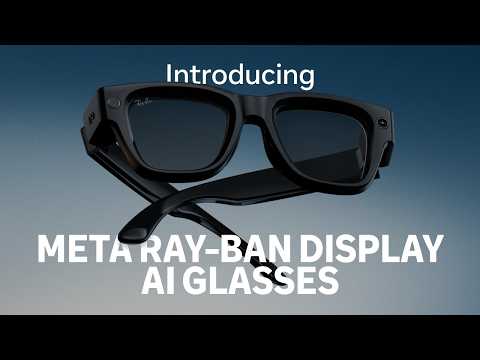
In his keynote at Meta Connect, CEO Mark Zuckerberg says that “glasses are the ideal form factor for personal superintelligence, because they let you stay present in the moment while giving access to all the AI capabilities that make you smarter.”
According to a Markets and Markets report, the Extended Reality (XR) market is projected to more than double — from US$37.94bn in 2025 to US$84.86bn by 2029.
Another major announcement in this space is the launch of Samsung Galaxy XR headset, promising the next generation of immersive, AI-driven spatial computing.




Executives

Beryl Tomay
Vice President, Transportation

Mark Zuckerberg
CEO