
Why are AI's Top CEOs Pedalling Back on Job Predictions?

The fear of AI and automation displacing human workers has been a defining anxiety for the past couple of years. This panic was actively fuelled by OpenAI CEO Sam Altman and Anthropic CEO Dario Amodei, who repeatedly warned that Gen AI would dismantle white-collar employment.
Cue May 2026 and the narrative has abruptly shifted. Admitting their predictions were incorrect, both executives are backtracking on their claims and aligning with traditional financial leaders.
Many now believe this sudden narrative shift stems from impending public listings marked in the calendar for both the companies this year.
With multi-trillion-dollar market debuts on the line, threatening to destroy the workforce does not seem be a marketing strategy to employ when wooing cautious institutional investors.
Eyeing US$1tn valuation
From Dario warning that AI could gut 50% of white-collar roles, to Sam sounding alarms that entry-level positions faced serious risk, Silicon Valley leaders have spent years predicting the slow elimination of white-collar jobs.
Speaking with Matt Comyn, CEO of Commonwealth Bank of Australia, Sam conceded he was “pretty wrong” about the short-term economic disruption, noting that this has simply not materialised.
He said: “I’m delighted to be wrong about this. I thought there would have been more impact on entry-level white-collar jobs being eliminated by now than has actually happened.”
Dario has also reframed automation not as a destroyer of jobs, but as a multiplier of output. He notes: “If you automate 90% of the job, then everyone does the 10% of the job. And the 10% kind of expands to be 100% of what people do and kind of 10-times their productivity.”
The abandonment of doomsday predictions comes as OpenAI and Anthropic eye a US$1tn valuation in their respective IPOs this year. Some analysts have asserted that the initial apocalyptic job narrative has transformed from an effective marketing tool into a massive financial liability.
Institutional investors like pension funds and asset managers have always preferred predictable growth, enterprise stability and regulatory compliance over uncertainty. If OpenAI and Anthropic are to successfully go public, they must convince investors that they do not come with the threat of triggering an employment crisis.
Walking back on the doomsday prediction could also be a calculated move to defuse regulatory landmines. If regulators conclude that these platforms will permanently displace half the workforce, severe antitrust scrutiny will jeopardise the upcoming listings.
By rebranding Gen AI from an omnipotent threat into a corporate efficiency utility, Sam and Amodei seem to now be speaking the stable language that Wall Street demands, following the steps of financial giants like David Solomon, CEO at Goldman Sachs.
David has argued consistently since late 2025 that the panic is overblown, pointing to a century of economic disruption, drawing a parallel from the electrification of the 1900s to the digital revolution of the 1990s.
He says: "The United States has a long track record of creating new jobs in response to disruption … I don’t see any reason to think this dynamic will stop now."
Resilient white-collar employment
Tech sector layoffs passed 115,000 through May 2026, yet the Yale Budget Lab finds no significant changes in occupational unemployment.
To explain this resilience, economists point to Jevons paradox. This 19th-century principle states that as a resource becomes more efficient and cheaper, demand for it explodes.
The phenomenon applies directly to software, as Box CEO, Aaron Levie, notes that automating a task reduces its cost, which ultimately skyrockets demand.
He says: "If you looked at what work looked like a few decades ago and saw how much faster everything is or easier it is to produce today, even before AI, you’d certainly have been convinced there’d be no jobs left. Yet the opposite has happened. Why?"

According to Aaron, automation will not decrease demand for a certain role, but rather increase it, as automation will deliver "the same value proposition, but cheaper".
This economic resilience supports the labour market, however, the way roles evolve also hides a deeper reality.
While Dario says automating 90% of a job allows the remaining 10% to expand and multiply worker productivity, to a worker this split represents a psychological trap.
Routine tasks provide vital cognitive buffer time which is important to maintain sustained focus throughout the working day. If automation removes these simple duties, an eight-hour day condenses into an unrelenting gauntlet of complex, taxing decisions.
Ultimately, automation tools usually do not end up giving workers time back, but rather raises the baseline of expected production, notes the Goldman Sachs chief.
Company portals




Executives
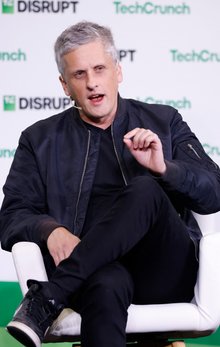
Aaron Levie
CEO

Dario Amodei
CEO and Co-Founder
David Solomon
Chairman & Chief Executive Officer

Matt Comyn

Sam Altman