The IEA & AI Observatory: Tracking AI’s Impact on Energy
AI can both accelerate sustainability goals and hinder them.
Whilst the energy needed to use AI is heating up data centres across the world, it is also being used to enhance technology to improve sustainability initiatives.
Now, the International Energy Agency (IEA) has launched its innovative Energy and AI Observatory, generating considerable interest in the sustainability sector.
What's unique about this observatory, is that it compiles and analyses the latest data on the emerging synergy between AI and the energy sector – offering insights into how these two fields are converging.
Data needs of AI
The IEA highlights the evolution within AI: “There has been a step change in the capabilities of AI, driven by falling computation costs, a surge in data availability and technical breakthroughs.
“There is no AI without energy; at the same time, AI has the potential to transform the energy sector.”
The IEA also emphasises that the “new and fast-moving field of AI requires a new approach to gathering data and information.”
The observatory is designed to provide current data and a comprehensive perspective on the effects of AI on energy demand and applications for efficiency, innovation, resilience and competitiveness in the energy sector.
Developed and maintained by the IEA, the observatory draws data and insights from collaborators in the energy and tech industries.
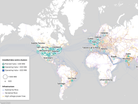
Highlights include global data centre capacity maps and power usage, alongside case studies of AI deployment models.
Despite the significance of data centre electricity consumption in assessing AI’s energy demand impacts, comprehensive global statistics remain unavailable.
The IEA has constructed a global model to estimate these energy consumptions by region and time.
Challenges of data centres
The IEA discusses the increasing investments in data centres vital for AI models, noting gigawatt-scale clusters emerging in regions like North America, Europe and Asia Pacific.
The observatory says: “AI is making data centres larger and more power-intensive, raising the importance of electricity generation capacity and grids in the locational decision-making of data centres.
“However, existing infrastructure, policy frameworks, and talent pools have created momentum supporting continued data centre development.”
The IEA also stresses the need for grid operators and policymakers to “understand how the data centre pipeline is evolving.”
Case studies: algorithms in practice
Currently, the observatory showcases 19 case studies across various sectors, illustrating AI’s use in enhancing energy efficiency, reducing costs and boosting competitiveness and innovation.
An example includes Hitachi Energy’s project improving energy price forecasting accuracy using AI-driven probabilistic methods and advanced machine learning (ML) algorithms.
Teams tested numerous algorithms and methods, refining processes to achieve high accuracy rates for energy pricing predictions – demonstrating AI’s potential for practical application in energy markets.
These applications have been integrated into a solution known as Nostradamus AI, allowing users to generate energy forecasts with ease and accuracy, even without a data science background.
Endorsements from Google and IBM
Sustainability leaders are backing the IEA and AI Observatory’s initiative.
IBM Chief Sustainability Officer (CSO) Christina Shim says: “I’m delighted that IBM contributed by sharing our work on the Electricity Access Forecasting AI model.”
She elaborates on the AI model, co-developed with the UNDP, utilising IBM watsonx and IBM Cloud technologies to project electricity access in 102 Global South countries through 2030.
Google’s CSO Kate Brandt, also recognises as a top figure in sustainability by Sustainability Magazine, saying: “The IEA’s Energy and AI Observatory creates a comprehensive reference, gathering crucial data and providing a global, informed vision on AI’s impact in the energy sector.”
Two AI solutions by Google highlighted include:
MethaneSAT
Kate says the collaborative effort with the Environmental Defense Fund on the MethaneSAT satellite, enhancing the detection and measurement of methane emissions.
Tapestry
X’s Tapestry AI-powered tools aid grid operators like Chile’s CEN in smarter and faster grid planning, supporting carbon neutrality goals.
This observatory marks the growth of AI’s role in the energy sector as well as sets a precedent for future developments and innovations within the field, promising ongoing contributions to global energy solutions.
Explore the latest edition of AI Magazine and be part of the conversation at our global conference series, Tech & AI LIVE.
Discover all our upcoming events and secure your tickets today.
Also sign up to our free weekly newsletter for the latest insights and stories straight into your inbox.
AI Magazine is a BizClik brand