
Tetra Pak Invests US$1.8m in AI Waste Sorting: Explained
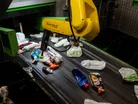
AI systems are being deployed in waste management infrastructure across the world as companies address gaps between collection and processing capacity.
Now Tetra Pak, the Swedish packaging manufacturer, is completing installation of AI-powered sorting technology at three UK recycling facilities in partnership with Recycleye, a British start-up specialising in computer vision systems for waste identification.
The installations are an investment of US$1.8m and mark Tetra Pak’s largest commitment to British recycling infrastructure.
The company has allocated US$3.1m specifically for UK carton sorting systems as part of a US$44m annual global spending programme on packaging recycling development.
How does the AI sorting work?
The technology uses computer vision to identify beverage cartons within mixed waste streams.
Cameras capture images of materials moving along conveyor belts, while machine learning (ML) algorithms classify items in real time.
Pneumatic valves then separate identified cartons from other waste, preparing them for recycling processes.
The success stories
Levenseat Resource Management in Central Scotland is the third UK facility to receive the technology and the first in Scotland to deploy Recycleye’s QuantiSort system.
The facility serves regions including Lanarkshire, Ayrshire and Dumbartonshire.
“AI has the capability to transform waste management and we hope that our work with Levenseat and others will show MRFs and local authorities the possibilities this flexible technology offers,” says Victor Dewulf, Co-founder and CEO of Recycleye.
Victor and the team have developed the QuantiSort system to identify specific materials within complex waste streams.
The technology processes visual data faster than manual sorting while maintaining consistent accuracy across shifts.
Tetra Pak views the Levenseat installation as a potential blueprint for carton sorting capabilities across Scotland and other UK regions.
The company produces beverage cartons for dairy, juice and other liquid products, creating an interest in ensuring materials can be recovered and recycled.
Now, the Scottish installation follows regulatory developments aimed at increasing recycling rates.
Further afield, J&B Recycling in Hartlepool received two robotic sorting arms in May – then Cumbria Waste Management in Carlisle became the first UK facility to use QuantiSort technology in July, following deployments at materials recycling facilities in Spain.
Materials recycling facilities, known as MRFs, process the mixed recyclable materials collected from households and businesses.
These facilities sort materials by type before sending them to reprocessors.
Then the installations address processing capacity constraints as collection programmes expand.
“We are delighted to be able to demonstrate the power that investment in cutting-edge AI technology holds when it comes to improving the UK’s recycling infrastructure,” says Awantika Chadha, Sustainability Manager at Tetra Pak UK.
The timing coincides with Scotland’s Circular Economy Act implementation and development of England’s Simpler Recycling programme.
Both frameworks aim to standardise collection practices and reduce confusion about recyclable materials.
The bigger recycling challenge
ACE UK, a consortium representing beverage carton manufacturers, reports that nearly three-quarters of British councils now collect liquid cartons at kerbside.
This creates demand for processing capabilities at recycling facilities.
“With almost three quarters of UK councils now collecting liquid cartons at the kerbside, it is vital that there is investment in MRF infrastructure,” says Mandy Kelly, CEO of ACE UK.
The gap between collection rates and processing capacity affects recycling efficiency rates for beverage cartons.
Cartons combine layers of paperboard, polyethylene and aluminium, requiring specialised separation processes.
This means that traditional optical sorters struggle to identify cartons within mixed waste streams due to their composite structure.
As a result, Recycleye’s system employs neural networks trained on waste material images.
The vital role of infrastructure
The three installations are a repeat business for Recycleye, demonstrating commercial traction for the start-up’s technology.

The company is focusing on materials recycling facilities as customers, targeting operators seeking to improve sorting accuracy and throughput.
Scotland’s Circular Economy Act and England’s Simpler Recycling programme both seek to standardise which materials councils collect and how facilities process them.
The programme addresses infrastructure gaps that have constrained carton recycling rates despite expanding collection programmes.
Mandy says infrastructure investment is “vital” given the expansion of kerbside collection programmes across British councils.