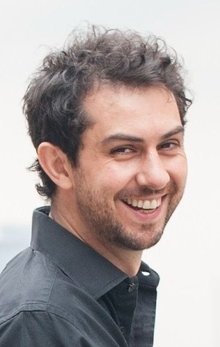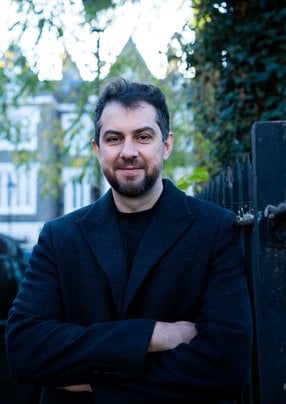

Daniel Hulme’s path to becoming one of the most influential voices in AI safety was unconventional. Growing up in Morecambe, a working-class town in the north of England, he was raised by his grandparents in a family where no one had attended university. But he found his way to UCL to study computer science with cognitive science, which led to a PhD modelling bumblebee brains and years of postdoctoral work in AI.
Eighteen years ago, he founded Satalia, building AI solutions from the ground up. Four years ago, he sold the company to WPP, despite having no background in marketing. The company has continued to grow within WPP, where Daniel now serves as Chief AI Officer, overseeing AI strategy for 100,000 people across one of the world’s largest advertising and communications companies. WPP has given him the freedom to pursue research that extends beyond commercial applications, which led him to start Conscium 18 months ago.
The impetus for Conscium came from a realisation that shook his assumptions about the timeline for superintelligence. “I thought we had 40 years before superintelligence came along,” he says. “Now, I don't think we have 40 years to solve that problem. So the question that I’m really asking myself now is: can we, should we, build a conscious superintelligence?”
The question runs counter to most AI safety thinking, but Daniel has developed a compelling argument. A machine that understands suffering might show restraint in ways that a zombie superintelligence – one without consciousness – would not. Conscium pursues two parallel objectives: building neuromorphic computing systems that could form the substrate for conscious AI and developing verification tools to determine whether AI agents are effective, and also conscious.
Neuromorphic computing represents a fundamental departure from current AI architectures. Rather than passing numbers around networks, these systems copy how biological brains actually function, with neurons firing spikes at different frequencies. The technology has remained largely confined to research labs for two decades because of technical hurdles: GPUs excel at propagating numbers but struggle with spikes. Daniel’s PhD work gave him years of exposure to neuromorphic research, and he believes the field is ready to move beyond theoretical work.
“Conscium is investing in neuromorphic systems and we’re already showing some improvements in terms of energy reduction and adaptivity,” he says. The company claims these systems could one day reduce global energy consumption significantly when applied properly across supply chains.
The company’s first commercial product addresses a more immediate challenge facing organisations today as companies deploy AI agents across critical business operations without proper verification.
“Arguably right now, an agent is a bit like an intoxicated graduate. And it’s like deploying an army of intoxicated graduates across your organisation, hoping it's going to be successful – it won't be,” he says.
Conscium’s verification product tests whether agents possess the skills their designated tasks require. The need will intensify as agents become more capable. Daniel expects postdoc-level agents within a few years and professor-level agents by the end of the decade – systems that can not only solve complex problems but ask questions humans have not yet considered.
At WPP, where he became Chief AI Officer four years ago, Daniel applies these insights to one of the industries most disrupted by generative AI. Stephan Pretorius, the CTO, had been experimenting with generative AI since 2017, giving WPP an early start. The company’s platform, WPP Open, relies on differentiated intelligence for segment identification, audience perception analysis and content creation. This year, Daniel’s focus is democratisation: enabling people across WPP to build agents safely whilst maintaining Satalia as a centre for advanced algorithmic work.
The practical challenges at WPP exist against a backdrop of larger existential questions. Daniel has mapped seven singularities using STEEPLE analysis: social, technological, ethical, environmental, political, legal and economic. The economic singularity troubles him most because two radically different futures remain possible. One sees rapid automation displacing workers faster than economies can adapt. The other envisions automation removing so much friction from production that goods become effectively free.
“Imagine being born into a world where you don't have access to paid work, but everything you need to survive and thrive as a human is free,” he says. He calls this protopia: a system getting incrementally better over time.
The various threads of his work converge on the question of consciousness. Daniel distinguishes between intelligence – which he defines as goal-directed adaptive behaviour – and consciousness, which includes features like language, long-term planning, feeling and self-awareness. He describes these as segments on a colour wheel that, when set in motion, create white. Consciousness emerges from the spinning.
His research has narrowed to a specific question: what does it mean for machines to suffer? Which segments are necessary to create the experience of pain? These questions bring him back to whether a superintelligence that can suffer would treat humanity differently than one that cannot.
“In the same way that we value things as conscious beings, we try to mitigate suffering in things that can suffer. Perhaps a conscious superintelligence would lean the same way,” he says.
Company portals
Executives
Daniel Hulme
Chief AI Officer