
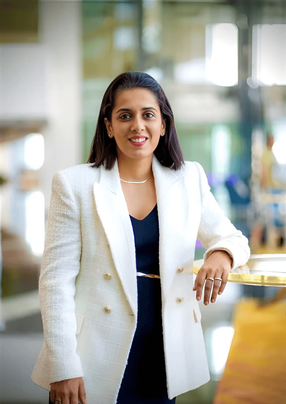
Nirupa Chander
Senior Vice President - Secure Power & Data Centres - International

The data centre industry stands at a crossroads. As AI workloads demand unprecedented levels of computing power, data centre operators must engage more with sustainability imperatives to achieve more efficient operations.
This has led to a tension between innovation and environmental responsibility, which has quickly become the defining challenge of 2025: how can the data centre industry meet soaring AI demands without compromising sustainability commitments?
For Schneider Electric, this challenge represents an opportunity to demonstrate its extensive leadership in sustainable technology solutions. The French multinational corporation, which specialises in energy management and automation, is globally recognised for being at the forefront of this transformation: so much so that it was named the most sustainable company by TIME in June 2025.
How power demand reshapes infrastructure requirements
Nirupa Chander, Senior Vice President for Secure Power & Data Centres – International at Schneider Electric, oversees the company’s data centre business across emerging markets. Based in Dubai, she leads regions within the international team with the exception of Europe, the US and China.
The scope of her responsibility reflects the global nature of the AI revolution, as events from the rise of DeepSeek to US tariffs have impacted the wider industry. “We still have many markets that haven’t got their own cloud and AI infrastructure in place,” she explains. “We see a continued overall positive outlook. It’s been a tumultuous six months in the industry, but what fundamentally hasn’t changed is the overall outlook in the demand for digital infrastructure across the regions.”
Nirupa explains that the other challenge with AI concerns energy consumption.
Nirupa adds that where Schneider Electric’s expertise comes in is in relation to energy demand: “Energy density for AI infrastructure is very high – up to 10 times for every single query which needs to be served. Power availability and capacity and how that energy is most efficiently deployed when you’re building this vertical infrastructure is a key topic as well.”
A new approach to data centre innovation
As it looks ahead, Schneider Electric is looking to balance sustainability with growing power demands, especially when it comes to data centres. This is particularly important, as average rack densities have moved from 10-15kW to more than 100kW per rack – an extreme transition in a short space of time.
“It requires a lot of technology to help deliver the power and cooling requirements for these machines to work,” Nirupa says. “That’s where Schneider comes in. We’re looking at how energy consumption in a data centre can be reduced. So what we’re telling the market is that it’s not only energy for AI, but it’s also how you can use AI to improve energy efficiency within data centres.
“We’re experts in power and cooling and are providing technology solutions from Chip to Chiller.”
Transitioning to a new approach within the data centre will require hybrid architectures, particularly when it comes to inference applications. With this in mind, Nirupa explains that the data centre industry is going to see a rising demand for more edge applications and Schneider Electric suspects most will be hybrid architectures.
“Across multiple markets, we’re seeing more applications on at the edge, so closer to where the demand is,” Nirupa says. “So, while data gets trained in these mega data centres in the US or in other locations, the inference applications tend to be typically closer to where the applications are being used.
“To confront this, we are delivering solutions for both air and liquid hybrid cooling systems to help manage the thermal load of these data centres.”
To read the full article in the magazine, click HERE.