
ServiceNow was founded in 2004 by software architect Fred Luddy with a mission to make the world of work, work better for people.
When Damien joined the company in 2011, they were still a pre-IPO startup with approximately 350 employees.
Today, ServiceNow is a 28,000-person global leader, trusted by some of the world’s largest brands to drive digital transformation across the enterprise.
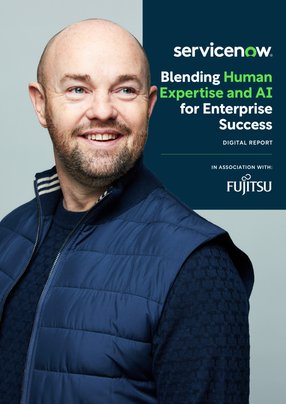
After 14 years at ServiceNow, Damien Davis has seen the company’s evolution alongside AI – and subsequently has found himself an important part of the heart of ServiceNow’s strategy.
As Senior Director in ServiceNow’s Customer Excellence Group – the human side of ServiceNow’s success – Damien is the key to shaping ServiceNow’s go-to-market AI and customer success strategy.
It’s a problem that’s creeping into more and more executives’ minds – now they have invested in AI fully, all eyes are on the return. But when CFO’s start asking questions about return on investment, some boardroom conversations are facing a harsh reality.
“Almost every customer I talk to says they have an AI strategy,” Damien says. “But you don’t need to have an AI strategy, you need a business strategy.
“A lot of companies see AI as exciting, but unless they’ve got a clear roadmap, adoption just slows down.”
This is where Damien comes in, at the intersection where strategy meets reality – managing analyst briefings, running customer advisory boards and translating between what the market wants to hear and what actually works.
He gets to see the gap between how companies talk about AI and what they’re doing with it – then closes it with ServiceNow’s winning strategies.
“My goal is to ensure that ServiceNow customers, partners and analysts don’t just see the best of ServiceNow – they feel it,” he says.
ServiceNow’s AI strategy: Native, not bolted on
As the world has adapted with AI, so has ServiceNow.
“ServiceNow has grown as an organisation and with the evolution of AI,” Damien says.
“It hasn’t really shifted what I do in terms of customer and people engagement, but what it has done is shifted the focus that I deliver from features to outcomes.
“So the question today isn’t ‘what can ServiceNow do?’ It’s ‘how quickly can AI help us turn potential into performance?’”
What started as an IT service management platform has morphed into something much more ambitious. Today, the company is the AI platform for business transformation, with branches reaching into HR, customer relationship management, security workflows and anywhere a business process exists.
Yet while half the enterprise software world has been scrambling to apply AI capabilities onto existing platforms, ServiceNow has been embedding AI directly into its core workflows since 2017.
That timing matters – because the company started using machine learning (ML) to predict incident categories and assignment groups for IT support tickets well before ChatGPT had influence.
Then by the time other companies were having boardroom discussions about being left behind, ServiceNow was already on its third generation of AI capabilities.
“We are AI native, not AI added on,” Damien explains. “That means our AI is built directly into the workflows. It’s not a sidecar, it’s an engine.”
When AI is baked into the platform from the ground up, users don’t have to juggle multiple interfaces or deal with clunky integrations.
ServiceNow also uses its own product internally. Its portal, My ServiceNow, combines its proprietary large language model (LLM), alongside external models like ChatGPT and Claude to provide personalised support for employees.
Damien mentions the company has seen dramatic improvements in case resolution times and team productivity.
The company now showcases these internal implementations at conferences through its “Now on Now” programme – proof to build customer confidence from willing to bet its own productivity on the technology it’s selling.
Success stories learnt from the early adopters
Damien points to enterprise organisations in highly regulated industries that are making AI work for them most effectively – financial services, government, healthcare – places where automation and governance aren’t nice-to-haves but absolute requirements.
ServiceNow’s website showcases corporate titans it’s enabling to evolve: Uber, Delta Airlines, Kraft Heinz, Visa.
Even Amazon has stood up on stage to talk about how ServiceNow’s AI helps the company drive automation in its operations centres.
The success stories share common threads – and Damien has distilled three key lessons from watching early adopters.
First, successful organisations start small rather than attempting wholesale transformation.
Second, these companies focus on business-critical use cases that demonstrate clear value.
Third, they invest in governance and change management from day one.
“Start small, scale fast,” he says. “Organisations that succeed don’t wait for perfection. Pick a business critical use case, prove the value and then scale responsibly.”
This is practical advice to complete business reinvention through AI.
What’s becoming clear is that success correlates more with organisational readiness than technical sophistication.
The companies winning with AI typically have mature data governance, clear process documentation and leadership committed to proper change management.
ServiceNow’s key to measurable AI success
One of the things that makes ServiceNow different is that customer success is built directly into the platform.
It shows up in three ways:
In-product success – customers get the Impact Store App right inside the platform they’re already working in.
Guidance, accelerators and insights are all at their fingertips, in context, without having to leave the workflow.
AI Agents and Automation – customers can immediately tap into the platform’s native AI and automation capabilities.
That means faster troubleshooting, smarter recommendations and automated actions that reduce effort and speed delivery.
And together, these drive faster time to value – customers adopt innovation more quickly, realize outcomes sooner and continuously improve on the Now Platform.
Additionally, ServiceNow’s partner ecosystem has grown substantially, showing in turn the company’s success and the complexity of enterprise AI deployment.
One notable partnership is with Fujitsu, the Japanese technology services leader.
Together, the companies have created a joint offering positioning Fujitsu Customer Advisory and Support Excellence (CASE) alongside ServiceNow IMPACT.
With this partnership, IMPACT delivers AI-driven customer success products delivering insights, guidance and value acceleration – while CASE provides Fujitsu’s expert advisory and implementation services, combining the two separate offerings to maximise customer value.
Damien has a personal connection here – having spent eight years at Fujitsu before joining ServiceNow.
Here’s where Damien’s practical solutions break through again – as ServiceNow measures AI success using the same metrics they’d use for any technology implementation: reduced costs, increased productivity, faster time to value, improved employee and customer experiences.
“AI success is measured the same way as any technology success,” he says.
“It’s measured in outcomes. Measuring success doesn’t change whether you’re using AI or any other technology software.”
No fancy new KPIs, no mysterious AI-specific metrics, just results.
ServiceNow’s CEO Bill McDermott frames this in terms of trust: “Trust is the ultimate human currency.”
Proving Bill’s point, Damien says: “I’m not really a deep dive techie, I’m not an engineer, I don’t come from an engineering background – but my mix of platform and product knowledge and customer engagement has really sort of shaped my path into customer excellence group and that’s where we scale our success globally.”
The future of humans and AI working together
In the future, Damien expects companies to stop talking about AI strategies as separate initiatives.
Instead, AI will become embedded across every workflow and revenue stream. Corporate boards will shift from asking “what’s our AI strategy?” to “how is AI supporting our core business functions?”
Three trends are emerging that business leaders need to watch: ethics, governance and trust frameworks; AI disaster recovery (AIDR) planning similar to IT continuity protocols; and the evolution from task automation to AI-enabled decision making.
AI disaster recovery is something that some companies are going through, some are close to and some can avoid.
Damien uses change management as an example – traditionally, IT teams require human approval for system changes based on risk assessment. As AI agents become capable of making autonomous decisions, he says: “At what stage do we want a check gate where a human needs to make a decision?”
“If this system goes down, what’s the impact of the business? If the payroll system goes down, is it catastrophic?,” Damien asks.
“We’ve put that same analogy into AI. At what stage do we want AI to make the decisions that are going to maintain business continuity and make sure that technology is safe and secure?
“Wrapping that all up like an emerging AI trend is this concept of human and AI collaboration. We refer to it as the bionic enterprise where people and AI augment each other.”
“What’s the difference between humans and AI?” he asks, “curiosity, adaptability and trust building, because AI transformation is a journey.
“Business leaders need to ask the right question and adapt quickly, otherwise their competitors will win the race as we’re hearing – and they need to bring their people along with them.
“AI takes the repetitive and the predictive, humans bring judgement, creativity and more importantly, empathy,” Damien says. “The best outcomes come from when you blend both together.”
Damien acknowledges something that many AI discussions ignore: that the technology works best when it complements human capabilities rather than replacing them.
The companies seeing real success focus on augmenting human decision-making rather than eliminating human involvement altogether.
For enterprise leaders still stuck in the experimentation phase, Damien’s advice is to anchor AI initiatives to specific business problems rather than technology experiments.
“Pick one use case that impacts revenue, cost or risk, prove the value, then scale the approach,” he says.
“We use judgement, creativity, empathy and curiosity. If you blend both together, that’s how you get the relationship between human expertise and AI evolving.”