
What Is Sovereign AI and Why Is It Gaining Traction?

AI stands as the defining technological revolution of our time, promising to reshape every facet of modern society.
From transforming healthcare and transportation to revolutionising commerce and entertainment, AI's impact is expected to generate trillions in economic dividends and productivity gains.
In response to this technological sea change, nations around the world are confronting a critical strategic imperative: how to secure their place in an AI-driven future.
This quest for what experts term "sovereign AI" is gaining pace. This is fundamentally reshaping markets and challenging traditional governance models.
But what is sovereign AI, how is it administered, and why is it seen as important?
"Complete control and ownership of the data journey, both from a technical and human capital perspective in a place that is your own," explains Francesco Tisiot, Head of Developer Experience at Aiven.
What is sovereign AI?
Sovereign AI represents a nation's capabilities to produce artificial intelligence using its own infrastructure, data, workforce and business networks.
At its core, it encompasses both physical computing infrastructure and data governance - particularly the development of foundation models trained on local datasets that can reflect specific dialects, cultures and practices.
This technological sovereignty extends beyond merely operating AI systems to having complete control over the entire data journey.
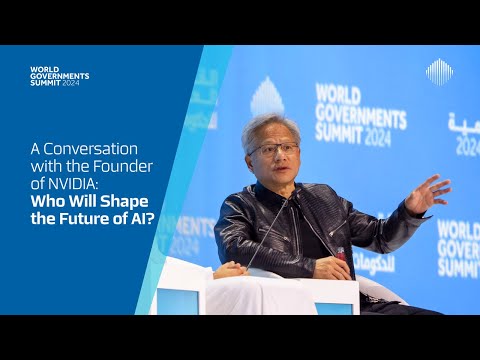
The administration of sovereign AI capabilities is being implemented through various models worldwide. At the heart of this infrastructure are what NVIDIA CEO Jensen Huang calls "AI factories" - specialised facilities "where data comes in and intelligence comes out."
Nations are pursuing different approaches to building this essential computing capacity, with some "procuring and operating sovereign AI clouds in collaboration with state-owned telecommunications providers or utilities" whilst others are "sponsoring local cloud partners to provide a shared AI computing platform for public and private-sector use."
Yet it’s not just the how that is important in this context, it is the why.
“AI is simply another computing tool which forms part of the sovereignty package,” explains Josep Prat, Staff Software Engineer at Aiven. “The real question is, what is spurring governments into action and how can nations best equip themselves to achieve sovereignty in relation to AI?”
Why sovereign AI?
The growing importance of sovereign AI has been catalysed by several factors, but one in particular is the creation, rise and explosion of Gen AI.
“There has been a well-publicised narrative for some time now that Europe needs digital sovereignty and a reduced reliance on US or Chinese hyperscalers,” says Francesco. “The recent popularisation of generative AI has only increased the intensity of this focus.”
This is not only due to its ability to bring about innovation for a country, but as the technology's potential impact extends far beyond commercial applications, nations see sovereign AI as essential for national security and economic competitiveness.
“It’s why the European AI Office - designed to support the implementation and enforcement of the EU AI Act - was created earlier this year,” explains Josep. “It’s also why the EU’s AI Innovation Strategy was developed. Intended as a platform to improve the region's use of AI on a global scale, it has a public and private investment package of around €4bn [US$4.3bn] through 2027 dedicated to Gen AI.”
Countries are now viewing it as imperative to safeguard innovation and data both for the benefit of their own citizens and to mitigate it getting into the wrong hands and being used against them in, for example, a cyber attack.
Nations are therefore in an arms race to equip themselves with the best AI capabilities to protect their own interests and achieve sovereignty. However, because the technology is advancing rapidly, an AI cyclone is gathering speed, with governments trying to keep up.
“In trying to achieve sovereignty, governments are rushing to fund projects, AI-focused start-ups and introduce regulation,” says Francesco. “While admirable, this is not going to bring AI sovereignty to life.”
The development of sovereign AI capabilities requires substantial infrastructure investment. Countries are pursuing various models, from state-owned AI clouds to public-private partnerships.
For instance, France-based Scaleway is constructing Europe's most powerful cloud-native AI supercomputer, while Italy's Fastweb is developing the country's first major AI supercomputer specifically for training Italian language models.
Yet, as Francesco emphasises, "Some European countries have a GDP smaller than the AI budget of some hyperscalers." This stark reality underscores the need for a coordinated European approach. "The only way to achieve sovereignty is through openness," he argues, advocating for "open source software, open data and open protocols."
Coordination of nations
Europe's path to AI sovereignty therefore may require a delicate balance between protection and collaboration.
A recent open letter coordinated by Meta and consisting of a number of large technology companies warned that fragmented regulation risks leaving Europe behind in the AI era.
The solution, according to Josep argues, lies in greater pan-European collaboration: "Having a bigger and more diverse data set from across Europe will enable the training and re-training of models to deliver the outcomes we'd all like to see."
This collaborative approach extends beyond data sharing, however. As nations build their AI factories—where "data comes in and intelligence comes out"—they must also invest in the fundamental components of AI infrastructure.
"Some European countries have a GDP smaller than the AI budget of some hyperscalers."
This includes not just software and data centres, but also the physical components that power them.
"What's the point in going to extreme lengths to achieve sovereignty, only to rely on overseas companies for chips and component parts?" says Francesco.
The race for AI sovereignty represents more than just technological independence, it's increasingly seen as being about protecting national interests, and ensuring economic competitiveness in an AI-driven future.
For Europe, who’s capabilities are tailing US and China, success will require striking a careful balance between protective measures and open collaboration, all while moving at a pace that matches the relentless evolution of AI technology itself.
******
Make sure you check out the latest edition of AI Magazine and also sign up to our global conference series - Tech & AI LIVE 2024
******
AI Magazine is a BizClik brand