Tinder, Zoom and Docusign combat AI Bots with Iris Scans
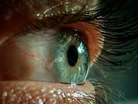
As AI advances rapidly, identifying an AI-generated text is not the only challenge we face today. Following a rise in the number of fake AI accounts, mainstream apps and tools like Zoom, Docusign and Tinder are turning to the World network for its iris-scanning technology for human verification.
Known for its orb-shaped scanning device, World, formerly known as Worldcoin, is a blockchain-based humanity verification start-up co-founded by Sam Altman, who is also the CEO of OpenAI.
Under the label ‘proof of human’, the company aims to provide a reliable way to authenticate people online through its World ID. The latest partnerships were announced at a live event called the Lift Off in San Francisco last week.
The event featured an AI-generated deepfake montage of well-known journalists and public figures like Dan Rather and former US President Ronald Reagan. Developed using their historic video footage, AI altered it to make them appear as if they were realistically discussing the growing need to verify human identity online.
Countering bots: An eye for an eye
Existing trust models rely on device continuity, with credentials like password and PIN, for security. The system trusts the device based on the mere assumption that it is a human operating it.
According to World, this is today’s main issue as that “assumption is the weakest link and advancements in AI are making it even weaker”.
This then gives way to phishing, credential theft, social engineering and session hijacking as the system only verifies the device.
To counter this, World is launching a full-stack proof of human through a new World ID that introduces an account-based architecture that makes private proof of human more secure and portable.
Consumer platforms can leverage this protocol that utilises key rotation, recovery, multi-key support and session management, making it production grade ready for enterprises.
Ushering in a new era of online dating, this technology will be used by popular dating app Tinder to expand its World ID integration to the United States. Users will be asked to submit a scan of their iris to confirm they are human and verified humans will get a unique badge on their profile.
This was first piloted for Tinder users in Japan through a collaboration with Match Group that owns and operates the largest global portfolio of online dating services, including Tinder, OkCupid and Hinge.
World of real people
Another platform that is partnering with World is the video calling service Zoom. Recently, it has been facing an increasing number of real-time sophisticated deepfakes on the platform.
One usually identifies deepfakes by analysing video frames and trying to spot fake video feeds. While detection does get better with improving model capabilities, so do attacks.
To combat this, World ID says it takes a fundamentally different approach: “Rather than just trying to detect whether a video feed is fake, World ID Deep Face lets you confirm that the person you're speaking with is a real human, not a deepfake.
“The other person can easily prove they’re not a deepfake in a few steps using face authentication, shifting from detection to real-time proof of presence.”
The verification happens by matching the elements gathered in three different stages: a previously verified image, a live selfie taken on their device and their video feed during the call. If all three match, it confirms that the person is a real, verified user.
Zoom is the first communications platform to offer integration of Deep Face directly into its meetings product.

Docusign, which manages electronic agreements with electronic signatures on different devices, will also be using the World ID where signers can confirm specific attributes about themselves.
Previously, it used to rely on SMS codes, liveness checks, biometric identification and other methods for verifying the identity and accountability of users.
From scepticism to reality
Ever since its inception, World has faced quite a bit of backlash on its products. From being labelled “questionable” by French privacy watchdog CNIL to facing investigations at the hands of UK’s data regulator Information Commissions Office (ICO), the company has since come a long way.
Its foray into the mainstream is bolstered by the increasing number of malicious deepfake scams driven by the advancing AI. With time, AI-generated content is expected to outnumber human-created content. According to Sam, the future remains secure “as long as we can tell between the two”.
The use of deepfakes in the San Francisco demonstration crucially underlines how quickly synthetic media is evolving and why tools designed to distinguish real humans from AI-generated identities are becoming more important than ever.
With nearly 18 million verified humans across 160 countries, the real human network secured by the World ID seems to be on track of becoming a foundational infrastructure for the internet.