OpenAI Launches NextGenAI to Transform Education with AI
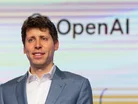
OpenAI has launched NextGenAI, a new consortium with 15 research institutions dedicated to using AI to transform education and accelerate research breakthroughs.
The company is committing US$50m in research grants, compute funding and API access to support students, educators and researchers at the forefront of tackling high-impact challenges and advancing the frontiers of knowledge.
The initiative will contribute to advancing notable breakthroughs in areas such as healthcare, medical diagnostics, academia and accessibility, making OpenAI’s technology and resources available to over one million students, faculties and administrators in 13 universities.
"The field of AI wouldn’t be where it is today without decades of work in the academic community,” says Brad Lightcap, OpenAI COO.
“Continued collaboration is essential to build AI that benefits everyone. NextGenAI will accelerate research progress and catalyse a new generation of institutions equipped to harness the transformative power of AI.”
Advancing education with AI
OpenAI was established to ensure that artificial general intelligence (AGI) benefits all of humanity.
This mission is set out in its OpenAI Charter, which explains that the company’s primary duty is to humanity and that it is dedicated to driving the positive impact of AI on society.

Central to this is the belief that AI has the power to drive progress in research and education, but only when people have the right tools to harness it.
Working with institutions in the US and abroad, NextGenAI aims to catalyse progress at a faster rate than any one institution would alone.
With this approach it will support scientists searching for a cure, scholars uncovering new insights and students mastering AI for future applications.
Nurturing tomorrow’s AI leaders
As well as fuelling next-generation discoveries and advancing scientific research, NextGenAI will help prepare the next generation to drive AI and shape the technology’s future.
It also reinforces the vital partnership between academia and industry, ensuring that AI’s benefits extend to laboratories, libraries, hospitals and classrooms worldwide.
Alongside OpenAI, the initiatives founding partners are:
- Caltech
- The California State University System
- Duke University
- University of Georgia
- Harvard University
- Howard University
- Massachusetts Institute of Technology
- University of Michigan
- University of Mississippi
- The Ohio State University
- University of Oxford
- Sciences Po
- Texas A&M University
- Boston Children’s Hospital
- Boston Public Library
“Ohio State is at the forefront of a multidisciplinary approach to the benefits of AI, significantly impacting both research and education,” says Peter J. Mohler, Executive Vice President for Research, Innovation and Knowledge at Ohio State University, which is leveraging AI in the fields of digital health, advanced therapeutics, manufacturing, mobility, energy and agriculture.
“We are excited to join Open AI and this elite research partnership, which will enable us to drive even more groundbreaking discoveries and advancements in medicine, manufacturing, computing and beyond.”
At Harvard University, researchers are using OpenAI tools to reduce the time it takes patients to find the right diagnosis, particularly for rare orphan diseases. "As a university, our mission is to help enable discovery and innovation that has positive impacts on our world,” says the institute's Vice Provost for Research, John H. Shaw.
University of Mississippi is exploring new ways to integrate AI into its core mission of education, research and services to advance AI-driven solutions benefitting students, faculty and the broader community.
According to Dr. John Higginbotham, UM Vice Chancellor for Research and Economic Development at University of Mississippi: “The NextGenAI partnership marks a significant step in the University of Mississippi’s efforts to build on our existing expertise in artificial intelligence and explore new ways to integrate AI into our core mission of education, research and service.”
Other examples of how NextGenAI will advance breakthroughs include Duke University’s scientists pioneering metascience research and MIT students training and fine-tuning their own AI models.
OpenAI and University of Oxford
As part of the partnership, the University of Oxford will expand its AI offering and capabilities in research and education, building on the development of its AI & Machine Learning Competency Centre.
The five-year collaboration will see the rollout of ChatGPT Edu, a version of ChatGPT built for universities to responsibly deploy AI to students.
It will also include a project to digitise materials in the Bodleian Library, the university’s main research library.
As part of this programme, 3,500 global dissertations created between 1498 and 1884, that were previously inaccessible online, will become searchable and accessible for students globally.
Anne Trefethen, Pro-Vice-Chancellor for Digital at the University of Oxford notes: “This new collaboration marks an exciting step forward, offering fresh opportunities to enrich our research, expand our AI capabilities and foster skill development.
"By working together, we can learn from one another, advancing the frontiers of artificial intelligence, understanding its impact on education and unlocking its vast potential for the benefit of our university community and beyond.”
Explore the latest edition of AI Magazine and be part of the conversation at our global conference series, Tech & AI LIVE.
Discover all our upcoming events and secure your tickets today.
AI Magazine is a BizClik brand