
Microsoft's SPARROW: AI-Powered Biodiversity Monitoring
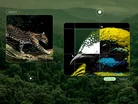
According to the World Wildlife Fund (WWF), monitored global wildlife populations have declined by an average of 73% since 1970, with around one million plant and animal species now facing extinction due to habitat loss, climate change, overexploitation and pollution.
The technical challenge of deploying real-time data processing infrastructure in remote locations has historically prevented researchers from accessing timely environmental intelligence.
Microsoft's SPARROW (Solar-Powered Acoustic and Remote Recording Observation Watch) addresses these constraints through a distributed edge computing architecture that processes environmental data locally before transmitting compressed insights via satellite networks.
Developed by Microsoft's AI for Good Lab, SPARROW represents an advancement in autonomous environmental monitoring systems, combining machine learning inference at the edge with satellite connectivity to enable continuous ecosystem surveillance across some of the planet's most challenging deployment environments.

The platform has processed more than one billion images and acoustic recordings across 11 countries on five continents, demonstrating the scalability of its technical architecture and data processing capabilities. This processing volume provides researchers with unprecedented access to real-time ecosystem analytics previously impossible to achieve through traditional collection methodologies.
Edge computing architecture and power management
SPARROW's technical design centres on autonomous operation in environments lacking traditional infrastructure. The system utilises solar energy harvesting to power on-device processing units that interface with camera traps, acoustic sensors and environmental monitoring equipment.
Rather than accumulating raw data for manual retrieval, the platform executes AI model inference locally, processing images, audio recordings and sensor inputs directly at the edge before transmission.
This architectural approach reduces bandwidth requirements whilst enabling near real-time data availability for conservation teams. The edge processing layer runs advanced machine learning models capable of automated wildlife detection and species identification without requiring constant connectivity to cloud infrastructure.
Field deployments have demonstrated continuous operation for 12-month periods without maintenance intervention, validating the system's power management and computational efficiency across diverse environmental conditions including rainforests, savannas and mountainous terrain.
The system's thermal management and power optimisation algorithms ensure consistent performance across temperature extremes, whilst the modular hardware design enables field technicians to replace individual components without requiring complete system replacement, extending operational lifespan in remote deployments.
Machine learning pipeline and data transmission
The platform's AI architecture processes environmental data through multiple stages before transmission via low-earth orbit satellite networks.
According to Juan Lavista Ferres, Corporate Vice President and Chief Data Scientist at Microsoft: “The Microsoft AI for Good Lab built this system that has processed a billion images across 11 countries, giving researchers, conservationists and scientists the time to focus more on their discovery rather than the logistics of collecting and managing data in the field.”
SPARROW's machine learning pipeline handles multiple data modalities simultaneously, including visual imagery from camera traps, acoustic recordings from audio sensors and telemetry from environmental monitoring devices. The edge inference layer executes species classification algorithms locally, extracting relevant features before compressing and transmitting results through satellite connectivity.
This distributed processing model enables organisations to deploy monitoring infrastructure across regions where traditional cellular or internet connectivity remains unavailable, whilst maintaining data freshness comparable to connected environments.
Integration capabilities and data management
The technical platform supports heterogeneous data collection methodologies, including wireless GSM and 4G camera traps, drone video streams, manual uploads, satellite-connected devices and dedicated SPARROW field units. This flexibility in data ingestion allows researchers to integrate existing monitoring equipment with SPARROW's processing and transmission infrastructure.
The introduction of SPARROW Studio provides researchers with collaborative tools for species verification, biodiversity reporting and standards-compliant data management. The system implements role-based access controls, enabling distributed teams to work with environmental datasets whilst maintaining data ownership and security requirements.
According to WWF, forests provide habitats for 68% of all mammal species and 75% of all bird species, whilst nearly 88% of the world's plant species rely on animals for pollination. The organisation estimates that more than half of the world's GDP is directly or indirectly dependent on nature and ecosystem services, highlighting the economic importance of biodiversity monitoring infrastructure.

Technical applications beyond biodiversity
Microsoft has adapted SPARROW's underlying AI architecture for CONDOR, a wildfire detection system deployed across California.
"Beyond biodiversity in places like the Amazon rainforest and the Serengeti, we're applying this AI technology to help address other environmental issues, including wildfire detection through CONDOR," Juan says.
The adaptation demonstrates the portability of the platform's edge computing and machine learning components across different environmental monitoring applications. CONDOR utilises similar distributed processing capabilities to identify fires during early stages, suggesting the technical architecture can support additional use cases requiring real-time environmental analytics in remote locations.
Recent enhancements include direct wireless integration with GSM and 4G-enabled camera traps, expanding connectivity options beyond satellite networks where cellular infrastructure exists. These capabilities improve data transmission rates and reduce latency for deployments in semi-connected environments.
By combining solar-powered edge computing, distributed AI inference, satellite connectivity and open collaboration tools, Microsoft's SPARROW platform represents a technical advancement in autonomous environmental monitoring systems capable of operating at scale across diverse global ecosystems.
Company portals

Executives

Juan Lavista Ferres
CVP & Chief Data Scientist