
Bigger Not Always Better as OpenAI Launch New GPT-4o mini
OpenAI has announced the release of GPT-4o mini, its latest and smallest AI model, a new addition to the GPT family that is set to replace GPT-3.5 in ChatGPT.
Available to Free, Plus and Team users in place of GPT-3.5 Turbo, with Enterprise following soon, GPT-4o mini boasts impressive capabilities, scoring 82% on the MMLU benchmark and outperforming GPT-4 on chat preferences in the LMSYS leaderboard.
The model supports both text and vision inputs in the API, with plans to include image, video, and audio inputs and outputs in the future. It has a context window of 128K tokens and knowledge up to October 2023, making it a versatile tool for various applications.
Why a smaller model?
The development of GPT-4o mini reflects a growing trend in the AI industry towards creating smaller, more efficient language models.
Both Google and Anthropic have released ‘mini’ versions like Gemini Flash and Claude Haiku.
These compact models, known as Small Language Models (SLMs), offer several advantages over their larger counterparts.
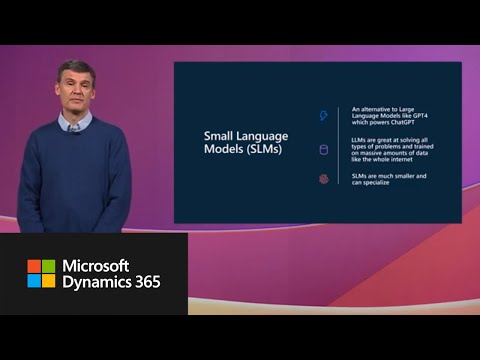
Efficiency is a key benefit, as smaller models require less computational power, resulting in faster processing times and quicker responses. This efficiency translates to lower energy consumption and more sustainable AI solutions.
The reduced size means lower computational and energy demands, making them significantly more cost-effective to run and maintain. This saving on the supplier side is then in theory, passed on to the consumer.
This affordability opens up AI possibilities for smaller organisations and startups that may have previously been priced out of using advanced AI models in large quantities for things like code generation.
- GPT-4o mini in the API is the first model to apply OpenAI's instruction hierarchy method, which helps to improve the model’s ability to resist jailbreaks, prompt injections, and system prompt extractions.
GPT-4o mini scored 87.0%, in mathematical reasoning and coding tasks, outperforming previous small models on the market.
At US$0.15 per million input tokens and US$0.60 per million output tokens, GPT-4o mini is more than 60% cheaper than GPT-3.5 Turbo and an order of magnitude more affordable than previous frontier models.
Flexibility is also a hallmark of SLMs. They can be easily integrated into existing workflows, supporting various tasks such as routing submissions, automating content categorisation, and basic data analysis.
Their smaller size and reduced resource requirements make them considerably easier to incorporate into established business processes and technological ecosystems. This ease of integration is particularly beneficial for companies that may not have the infrastructure or expertise to handle larger, more complex AI models.
Benefits of GPT-4o mini
GPT-4o mini’s low cost and latency enable a broad range of applications, including chaining or parallelising multiple model calls, whilst its small stature make implementation into existing and smaller infrastructures now possible.
Both the size and cost reduction, but steady performance means Gen AI applications have now been opened up to even more companies.
As the field of AI continues to evolve, we will not only see models get bigger and better, but smaller and better too.
******
Make sure you check out the latest edition of AI Magazine and also sign up to our global conference series - Tech & AI LIVE 2024
******
AI Magazine is a BizClik brand