
Why Nvidia is Helping Bring AI to Container Security
In a significant move that underscores the growing intersection of AI and cybersecurity, Nvidia has unveiled a groundbreaking application for container security.
This development comes at a crucial time when organisations are grappling with the complexities of securing their containerised environments in an increasingly AI-driven landscape.
Deloitte is one of the first customers to use the new application for container security in its raft of cybersecurity solutions to help enterprises build secure AI.
“Cybersecurity has emerged as a critical pillar in protecting digital infrastructure in the US and around the world.”
AI a new frontier in container security
To appreciate the significance of Nvidia's innovation, it's crucial to understand the complexities of container security.
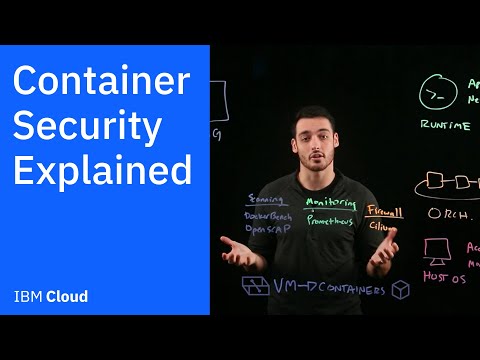
Containers, while offering numerous benefits such as enhanced portability and faster deployment, also present unique security challenges. They incorporate a multitude of packages and releases, each potentially harbouring security vulnerabilities that could compromise the entire system.
Key aspects of container security include vulnerability scanning, configuration management, access control, network segmentation, and monitoring. The goal is to maximise the inherent benefits of application isolation while minimising risks associated with resource sharing and potential attack surfaces.
Traditionally, security analysts faced a Herculean task of manually reviewing each package to identify potential security exploits across software deployments. This process was not only time-consuming and prone to errors but also difficult to automate effectively due to the intricate interplay of software packages, dependencies, configurations, and operating environments.
Nvidia's latest offering, the NIM Agent Blueprint, is set to revolutionise the way enterprises approach vulnerability analysis in software containers.
This innovative application provides developers with a comprehensive toolkit to build and deploy customised Gen AI applications, dramatically accelerating the analysis of common vulnerabilities and exposures (CVEs).
By leveraging GPU-accelerated, end-to-end AI frameworks, it empowers developers to create optimised applications capable of filtering, processing, and classifying vast volumes of streaming cybersecurity data with unprecedented efficiency.
What once took days can now be accomplished in mere seconds, thanks to the integration of Nvidia's cutting-edge applications, including NIM microservices, Morpheus cybersecurity AI framework, cuVS, and RAPIDS accelerated data analytics.
Transforming container cybersecurity
One of the most compelling aspects of this technology is its ability to automate real-time analysis and responses. Moreover, it can generate synthetic data to train AI models, enabling more accurate risk identification and facilitating 'what-if' scenario planning.
Yet, the application of Gen AI in cybersecurity extends beyond mere automation. These advanced systems can rapidly digest and interpret information across a wide array of data sources, including natural language. This capability allows for a deeper understanding of the context in which potential vulnerabilities could be exploited.
For instance, AI-enhanced cybersecurity systems can analyse enormous datasets to identify patterns and anomalies that might indicate a breach, often detecting potential threats in real-time—before human analysts even become aware of them.
As the container ecosystem continues to evolve, so too must our approach to securing it. Nvidia's NIM Agent Blueprint represents a significant leap forward in the realm of doing just that.
******
Make sure you check out the latest edition of Cyber Magazine and also sign up to our global conference series - Tech & AI LIVE 2024
******
Cyber Magazine is a BizClik brand