Foxconn Unveils First Large Language Model 'FoxBrain'

Hon Hai Research Institute has introduced Taiwan’s first traditional Chinese large language model (LLM), known as FoxBrain, representing a significant evolution in Taiwan’s AI and technology innovation.
The new model, which was developed using a more efficient and lower cost training method that took just four weeks, is designed to enhance manufacturing, supply chain management and intelligent decision making processes.
The institute, operating under Hon Hai Technology Group (Foxconn), says the AI system demonstrates strong reasoning capabilities and is optimised for local language patterns.
It was initially developed for applications used in Foxconn’s internal systems including data analysis, decision-making, document collaboration, mathematics, coding and problem-solving.
The company now plans to make FoxBrain open-source and shared publicly in the future.
Dr Yung-Hui Li, Director of the AI Research Center at Hon Hai Research Institute, says: “Through carefully designed training methods and resource optimisation, we have successfully built a local AI model with powerful reasoning capabilities.”
Foxconn’s AI strategy and Nvidia’s role
FoxBrain is trained using 120 Nvidia H100 GPUs, which are connected via Nvidia’s Quantum-2 InfiniBand networking technology. This system facilitates high-speed data transfer, a crucial factor in AI model development.
During training, Nvidia supported Foxconn through its Taipei-1 Supercomputer facility, providing both computational power and technical guidance.
The model is built using Nvidia’s NeMo framework, a toolset designed to develop and customise AI models efficiently.
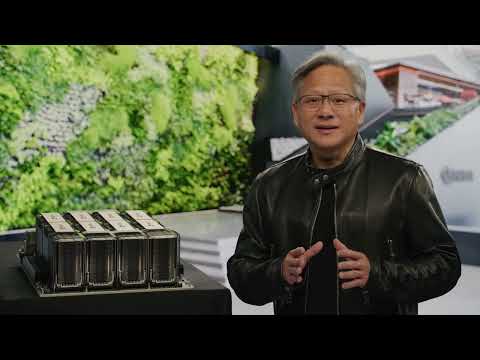
FoxBrain adopts the Llama 3.1 architecture developed by Meta and integrates 70 billion parameters—values adjusted by the AI as it learns. Foxconn states that its model surpasses Llama-3-Taiwan-70B, a similarly sized traditional Chinese AI model, in multiple performance categories.
Testing indicates that FoxBrain excels in mathematical reasoning compared to the base Meta Llama 3.1 model. Foxconn also claims it outperforms Taiwan Llama, which it describes as the leading Traditional Chinese language model available.

Mathematical reasoning and model capabilities
FoxBrain demonstrates strength in logical reasoning and mathematics, as measured by the TMMLU+ benchmark. This benchmark assesses AI performance across various knowledge domains.
To enhance training, Foxconn applied data augmentation techniques, generating 98 billion tokens of pre-training data across 24 topics. In AI models, tokens represent units of text processed by the system.
FoxBrain’s context window is 128,000 tokens, allowing it to retain extensive conversational history or document content, offering broader context awareness than models with smaller windows.
FoxBrain’s open-source potential and future applications
Foxconn acknowledges that while a performance gap remains between FoxBrain and DeepSeek’s distillation model—another AI system focused on knowledge transfer—its model approaches “world-leading standards”.
The development involved multiple stages, including data collection, cleaning, augmentation, continual pre-training, supervised fine-tuning and reinforcement learning from AI feedback (RLAIF). Additionally, Foxconn implemented a technique called “Adaptive Reasoning Reflection” to enhance the model’s capabilities.
- Developed proprietary data augmentation and quality assessment techniques for 24 topic categories
- Trained the model using 120 Nvidia H100 GPUs over a total of 2,688 GPU days
- Implemented a multi-node parallel training framework to ensure optimal performance and system stability
- Introduced an Adaptive Reasoning Reflection method to enhance the model's autonomous reasoning capabilities
Although initially developed for internal use, Foxconn plans to collaborate with industry partners to expand FoxBrain’s applications in manufacturing, supply chain management and business decision-making.
The company will showcase FoxBrain at the Nvidia GTC 2025 conference on 20 March in a session titled ‘From Open Source to Frontier AI: Build, Customise and Extend Foundation Models.’
"In recent months, the deepening of reasoning capabilities and the efficient use of GPUs have gradually become the mainstream development in the field of AI. Our FoxBrain model adopted a very efficient training strategy, focusing on optimising the training process rather than blindly accumulating computing power,” says Dr. Yung-Hui Li.
“Through carefully designed training methods and resource optimisation, we have successfully built a local AI model with powerful reasoning capabilities."
Explore the latest edition of AI Magazine and be part of the conversation at our global conference series, Tech & AI LIVE.
Discover all our upcoming events and secure your tickets today.
AI Magazine is a BizClik brand