
Boomi and the Rise of Agentic Transformation
AI is advancing everything, from speeding up tasks in people’s everyday lives to detecting life-threatening diseases before traditional symptoms even appear.
But AI is also complex and ever-changing, evolving faster than most can keep up with. Nonetheless, as a matter of survival, businesses must keep pace with AI’s transformation, continually reassessing its shifting value, its risks and ultimately, what approach delivers the greatest ROI.
Agentic AI, which autonomously makes decisions and completes tasks broadly without human intervention, is accelerating business operations even further. But as advanced AI needs a solid foundation to thrive, many businesses are running into a familiar obstacle: their data.
From poor data quality and fragmented systems to a lack of real-time access and governance, organisations are recognising major gaps in their ability to harness AI effectively.
This is part of what Boomi, the leader in AI-driven automation, calls “the data problem that everyone is ignoring”, according to Chris Hallenbeck, its SVP and GM of AI & Platform, because how can companies make effective use of AI without effective data?
Boomi is helping businesses understand how to utilise AI to the maximum and understand it holistically. In doing so, Boomi is positioning itself at the centre of the emerging AI agent ecosystem by offering solutions that not only create agents but also manage and govern them at scale.
From what’s possible to what’s safe
Agentic AI has emerged as a top focus area for business and technology leaders. Effectively autonomous digital workers, AI agents can perform increasingly complex tasks, from rerouting shipments to negotiating with vendors and approving expense reports.
Unlike traditional AI systems that provide insights for human decision-makers, agents actively execute tasks with minimal human intervention.
“In a very short period, I won’t be logging into systems. AI will take care of all that,” says Steve Lucas, Chairman and CEO of Boomi.
“Agents will be everywhere and there will be swarms of intelligent agents that exist just for you, just for me.
“Inside of an organisation, there will not be thousands or tens of thousands, there will be hundreds of thousands, even millions of agents.”
However, as Steve explains: “Boardroom conversations always start with what’s possible when we’re talking about AI agents, which is exciting.
“It’s transformative, it’s new. However, the conversation quickly pivots from what’s possible to what’s safe.
“Innovation and urgency without governance, things like agent sprawl, or agentic sprawl, can become a liability.
“It’s very important that companies get the balance right, that they say: ‘We understand what our objectives are and what AI can do’, while also asking the questions: ‘How can we govern, monitor, manage and optimise all of this? How can we get agentic transformation right?’”
Why agent governance is not a ‘nice to have’ anymore
As AI agents become embedded in business processes, agent governance becomes mission critical.
Chris says: “Everyone talks about agent governance but, in reality, most are lagging behind.”
This gap creates an unavoidable risk as organisations begin deploying AI agents in production environments.
“Once agents are deployed to production, auditors are going to want to check everything,” he adds.
The requirements for agentic governance are substantial: “You need to know exactly which version of the model was used, who approved it and when,” Chris explains.
“It must be properly versioned and you need assurance it wasn’t altered before going into production.
“Then you have to log what it does like it was a user. You need to have things like explainable AI or reasoning systems that actually have an explanation as to why it made its decision with some level of confidence.”
This means that, without such governance mechanisms, organisations face not only security and compliance risks but also the possibility of losing control over their AI deployments as they scale.
Why AI agent management can’t wait
The simplicity of building agents means their proliferation within organisations will happen faster than many anticipate – making establishing agent lifecycle management solutions a critical present-day need, rather than a future consideration.
“People today are only getting a grip of how fast agents are going to grow,” Chris warns.
“Once you see how simple it is to build an agent, you can build one in an hour or two, do testing for another day. Now, it solves a little problem within a workflow that used to be problematic, slow or required lots of coding and was suboptimal.”
This approach to creating agents is so easy that it can lead to what Chris calls “agent sprawl”, a phenomenon familiar to IT departments that have dealt with database sprawl, API sprawl and other manifestations of uncontrolled technology proliferation.
“All of a sudden, you see there are thousands and thousands of places where this would be amazing,” he says.
“The aspect of agent sprawl is there. But regarding the governance issue – all that has to be managed and monitored.”
Building trust in AI agent implementations
For AI agents to be successfully adopted within organisations, trust is essential – not just from leadership but throughout the company.
This trust isn’t built on promises of perfection but on visibility, intent and measured improvement. Trust, in other words, requires governance.
“Trust is not the same thing as promising perfection,” Steve explains.
“Trust doesn’t come from humans being perfect with each other. We are imperfect, yet we trust each other. We trust each other because of intent. We trust each other because of transparency.”
For enterprises implementing AI agents, this means starting with clear problems, deploying in controlled environments and measuring results meticulously.
“If you want enterprises to ultimately trust AI, that visibility needs to exist,” he continues. “Real, measurable improvements that make people’s work better and their lives easier – that’s it.
“The breakthrough moment that we’re all shooting for is when your team stops asking if agents will work in a particular scenario and starts asking where else can they apply them. That’s when trust becomes belief.”
The Boomi approach to AI agent management
Boomi’s AI strategy centres on creating what it calls a ‘connective fabric for agent orchestration.’
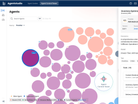
Boomi Agentstudio, the full agent lifecycle management solution, promises to help businesses evolve from digital to agentic transformation, shaping their future.
It includes four integrated components: Agent Marketplace, Agent Designer, Agent Garden, a secure container for running agents, and Agent Control Tower for monitoring and governance.
“Any company that wants to be part of the future of agent lifecycle management is going to need our platform,” says Steve.
“We’re going to unify fragmented agent frameworks. Google’s got one. Amazon’s got one. Microsoft’s got one. We’ve got one. We’re going to unify all of those.”
Boomi’s vision is to power the next wave of agentic innovation by serving as the interoperability hub where different agents, tools and standards converge.
This approach addresses another uncomfortable concern for IT leaders: avoiding vendor lock-in while still being able to innovate with emerging technologies.
“How do I innovate today and not get locked in? It’s top of mind, and IT leaders are trying to figure that out,” says Chris.
AI agents as digital employees
What AI can do, is make us superhuman – it can take on certain tasks that then allow us to uplevel ourselves to things that require human input and creativity.
Alison Biggan, CMO of Boomi, emphasises that this perspective helps address employee concerns about AI implementation.
“AI is not a replacement for humans; it really is at its best when it’s plugged in and adjacent to the things that the humans are doing, again giving you scale,” she says.
The company’s internal experience supports this approach.
At Boomi, AI has made employees more productive in engineering, support, sales, marketing and finance and audit.
Boomi’s sales teams are using AI every day, from preparing for customer calls highlighting the right business value to understanding the broader market competition.
The customer success and support teams are also using AI agents to provide immediate feedback and answers to questions, accelerating hyperproductivity.
Alison continues: “We have some really good stats around adoption and employees have customers telling us that using or having access to the agents has increased their productivity by almost 50%.”
This means that, as organisations move beyond seeing AI as just another technology concept to deploying agents as digital workers, their agent lifecycle management approach needs to evolve accordingly.
“The reality is that everyone is out there talking about the proliferation of agents, the opportunity of agents,” Alison continues. “But nobody’s talking about how you’re actually going to manage those agents, especially when you have agents across multiple systems and from multiple vendors.”
Alison says Boomi’s message is: “Everyone’s talking about AI agents. Everyone’s thinking about AI agents. Everyone’s being challenged on how they’re going to use AI agents. We can actually show you how you can use this to benefit your existing setup and system, your existing integrations.”
“The companies that ultimately are going to win in this era of AI-driven automation are the organisations that treat agents like digital employees,” says Steve.
“There’s onboarding. There’s roles. There’s accountability. There’s metrics.”
The difference, however, is scale.
“The difference will be from human talent, is that these agents can scale infinitely,” he continues.
“If you’ve got the right infrastructure, this will allow organisations to win and create disproportionate competitive advantage.”
For organisations considering AI agent implementation, Boomi says start building structured governance now or face significant challenges later.
Steve concludes: “Is there a version of my company that has the same number of employees that I have today, but I can do 10 times more? Two short years ago, any self-respecting CEO would have said, ‘not possible.’
“Today? Possible. The real question people have to ask themselves is: are they ready for this?”
To read the full article in the magazine, click HERE.