Arcadis, Google, IFS and ServiceNow on AI in Sustainability

While there are obvious and often-cited concerns about AI and its impact on the planet – increased water and electricity usage, not to mention additional carbon emissions – there are signs it could play a positive role when it comes to sustainability reporting, data management and beyond.
Research from the London School of Economics and Political Science and Systemiq shows AI can play a powerful role in the climate transition. It finds that, by 2035, AI could reduce global emissions by 5.4 GtCO₂e annually, outweighing AI’s own energy use. The study focuses on the power, transport and food sectors, which make up nearly half of global emissions.
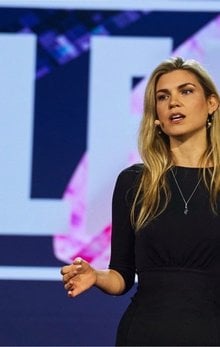
During Sustainability LIVE at London Climate Action Week, four senior sustainability leaders came together to discuss how their organisations are harnessing the power of AI to reduce environmental impact.
- Sophie Graham, Chief Sustainability Officer at IFS
- Adam Elman, Director of Sustainability, EMEA at Google
- Lyndsay Harris Kyei, Vice President of Global Impact and Sustainability at ServiceNow
- Mark McKenna, Global Director - Impact Office at Arcadis
“AI can really help us get the balance right between what the natural outcome looks like for ecosystem services and nature. ”
How is AI is revolutionising data and reporting
Traditional ESG have historically been reactive and focused on backward-looking metrics, such as reporting on emissions after the fact. AI is shifting it into a more proactive discipline, focusing on predictive and preventative environmental impact – building on AI’s ability to harness massive amounts of data.
Sophie explains: “When I get excited about AI, it's because it is great at managing huge amounts of data and turning that into insights, and it's also great at predicting.”
Sophie says she has used AI in her team to deal with painful issues around reporting: “We completely redesigned our annual reporting process to be AI first and we saved 70% of the time that we were spending on data crunching and stakeholder engagement.”
AI is particularly effective at turning large amounts of data into actionable insights.
Adam offers an example from Google’s work within the aviation sector, explaining that contrails – the line-shaped clouds of ice crystals produced by aircraft engines – account for a third of emissions from flying.
He says: “We use geospatial capabilities coupled with AI to track contrails over a long period of time and build a model to predict when they occur.”
Adam adds that, in its work with aviation partners, Google has proven it can cut contrails by 62% – an impact that simply wasn’t possible before AI.
“That's a third of emissions from flying cut by 62%,” he continues, “equating to about 0.6% of global emissions.”
Lyndsay explains that ServiceNow not only contemplates its own footprint, but also considers how it enables customers to meet their ESG goals as well.
She explains: “You're automatically starting to use AI and getting more insights into how you can make more responsible decisions for your business and create greater efficiency around your hardware.
“As we think about the future of AI, it truly comes down to how your data is aggregated and how you have insights into that. Then, you can start making better-informed decisions across the enterprise.”
“Let's face it, an efficient business is a sustainable business. ”
AI and the climate crisis
Running data centres clearly requires immense amounts of energy and water. In fact, data centres accounted for around 1.5% of the world’s electricity consumption in 2024, according to data from the International Energy Agency.
Campaigners have regularly questioned the justification for such energy-intensiveness given the ongoing climate crisis, while asking who is responsible: hyperscalers, end users or enterprise partners?
Ultimately, leaders at Sustainability LIVE agreed that it comes down to partnership across the entire supply chain.
“We’re building AI,” says Sophie, “so we’ve trained our R&D engineers on the Green Software Foundation principles, for example, but then we host with hyperscalers.”
“We completely redesigned our annual reporting process to be AI first. ”
She adds that customer demand is key to creating a business case for sustainability initiatives: “I think bolstering it with that business case, particularly in the absence of regulation, is really important.”
Adam asserts that large enterprises have a duty to ensure they are developing and deploying technologies in a responsible manner, highlighting that Google’s data centres are some of the most efficient in the world.
“We need to power these assets using clean energy,” he goes on. “Last year we bought 12 gigawatts worth of new clean energy capacity. We were the world's largest buyer of clean energy.”
Stressing the importance of collaboration, he adds: “There are the things we need to do, but if you're building and deploying AI models, there's all sorts of things you could and should be doing.”
Lyndsay expands: “The fact is, we're all in each other's supply chain. We all need to lean on one another and we all need to support this transition.”

Addressing skills gaps
As job security fears persist amid the rise of AI, the Institute of Sustainability and Environmental Professionals says the UK alone is facing a green skills gap of roughly 200,000 workers.
What’s more, there appears to exist a critical disconnect between the advanced AI capabilities companies need to scale and those currently possessed by the workforce.
Adam notes that, while some jobs will be impacted by AI, new jobs will be created: “There’s a lot of concern out there about AI in the workforce, but that's not new. There's always been a fear over technology and automation, and actually, over the years, it's just not panned out.
“There was a big study that said radiologists would be wiped out because technology's going to do it all, but now we have more radiologists than ever.”
He goes on to say that AI, in many cases, is “augmenting”, allowing people to focus on adding value rather than sifting through data.
Mark suggests the implementation of AI will bring benefits across the workforce as projects become more complex: “There’s a misconception on what the required skills are to deliver some of those big projects. From our point of view, less time crunching information and more time coordinating for better outcomes, certainly in the medium term, is a real benefit because projects are becoming more and more complex as the years go by.”
“There’s a lot of concern out there about AI in the workforce, but that's not new. ”
How AI drives sustainable value
AI stands to deliver lasting impacts across a variety of sectors and functions, spanning manufacturing, technology and energy.
IFS works with asset-intensive businesses – primarily in energy and utilities – to assist with long-term, 15 to 20-year asset investment decisions related to matters like national grid infrastructure and water pipes.
Sophie details the impact AI can have with IFS’s partners: “That means they have net-zero goals. They're dealing with the physical realities of climate change. How do they incorporate that into decisions on CapEx? Sustainability is then no longer words on a page that we report on in our annual reports, but something that is board level, data driven and looks forward 15 to 20 years.”
- AI could reduce global emissions by 5.4 GtCO₂e annually by 2035 (LSE & Systemiq)
- Data centres accounted for around 1.5% of the world’s electricity consumption in 2024 (IEA)
- The UK faces a green skills gap of roughly 200,000 workers (ISEP)
Building on themes of data and efficiency, Lyndsay says companies have a unique opportunity to get things right.
“The more insights businesses have, the more efficient decisions they can make,” she adds. “Let's face it, an efficient business is a sustainable business.”
Ultimately, the convergence of AI and sustainability may well revolve around striking a balance between industrial progress and environmental stewardship.
Mark concludes: “AI can really help us get the balance right between what the natural outcome looks like for ecosystem services and nature, as well as providing critical infrastructure for utilities and transport. And if we can get closer to that utopian future, I'd be pretty happy.”
Company portals




Executives
Adam Elman
Director of Sustainability for EMEA

Lyndsay Harris Kyei
Vice President of Global Impact and Sustainability

Mark McKenna
Global Sustainability Director
Sophie Graham
Chief Sustainability Officer