Anthropic: AI Drug Discovery and Medical Research

The release of Claude Science represents more than a product expansion for Anthropic, it could indicate an emerging competitive strategy among frontier AI companies.
As the technical capabilities of large language models reach a plateau in general-purpose benchmarks, major AI developers appear to be exploring specialised vertical applications as their next growth vector.
Claude Science functions as an AI workbench equipped with more than 60 curated skills and connectors spanning life sciences disciplines, built on top of Anthropic's core Claude architecture.
The platform provides an interface optimised for scientific research workflows, including capabilities for single-cell RNA sequencing analysis, CRISPR screen design, protein structure prediction and cheminformatics applications.
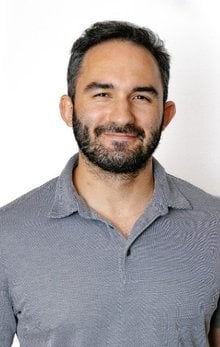
"We are doing this because we believe first and foremost that to build the right models, products and tools to accelerate the industry, we need to live it along with all of you," says Eric Kauderer-Abrams, Head of Life Sciences at Anthropic.
"We believe in the power of tight feedback loops, and there's no substitute for having our own experiences alongside you all in the trenches trying to develop drugs."
Technical architecture and differentiation
The technical approach behind Claude Science builds on Anthropic's October 2025 release of Claude for Life Sciences, which offered plug-ins and connectors to scientific research platforms. The evolution from a plugin architecture to a standalone product could indicate that Anthropic has developed sufficient domain-specific training data and fine-tuning methodologies to warrant a dedicated offering.
Early technical implementations demonstrate capabilities in automating literature reviews, reducing genomic analysis processing times and identifying potential drug targets through pattern recognition across biological datasets. These applications leverage Claude's extended context window and reasoning capabilities, adapted for scientific workflows.
Anthropic's strategy includes establishing proprietary wet labs and acquiring biotech companies to generate proprietary training data and domain expertise.
This vertical integration approach differs from pure software plays, suggesting Anthropic may be building competitive moats through specialised datasets rather than relying solely on architectural advantages.
Major pharmaceutical companies including Sanofi and Novo Nordisk have implemented Claude for various operational workflows, providing potential distribution channels for specialised products.
"Claude, paired with internal knowledge libraries, is integral to Sanofi's AI transformation," says Emmanuel Frenehard, Chief Digital Officer at Sanofi.
"We are seeing efficiency gains across the value-chain, while our enterprise deployment has enhanced how teams work. This collaboration with Anthropic augments human expertise to deliver life-changing medicines faster to patients worldwide."
Competitive landscape and positioning
The move positions Anthropic within an increasingly crowded market for AI-powered scientific discovery platforms. Microsoft Discovery, Google DeepMind and NVIDIA's BioNeMo represent parallel efforts from major technology companies to apply AI infrastructure to life sciences applications.
However, Claude Science appears to be among the first dedicated life sciences products released by a general-purpose frontier AI company available for public subscription use. This go-to-market approach differs from enterprise-only or research partnership models employed by some competitors.
The strategic question for AI companies may be whether vertical specialisation represents a defensible competitive advantage or commoditises as open-source models develop similar capabilities.
Anthropic's approach of building operational expertise through internal drug development programmes could provide differentiation if domain knowledge becomes as important as model architecture.

Implications for frontier development
Louise Lind Skov, Director of Content Digitalisation at Novo Nordisk, explains: "We have consistently been one of the first movers when it comes to document and content automation in pharma development. Our work with Anthropic and Claude has set a new standard – we are not just automating tasks, we are transforming how medicines get from discovery to the patients who need them."
The broader pattern emerging across frontier AI companies suggests the industry may be entering a phase where technical capabilities in general-purpose models provide diminishing competitive differentiation.
As benchmark performance converges among leading models, vertical market applications with specialised interfaces, curated toolsets and domain-specific training could become primary vectors for market share capture.
Claude Science is significant as it is a standalone offering, placing it in the same bracket as the widely used Claude Code and Claude Cowork products – a signal that AI’s healthcare uses could be a core focus for Anthropic moving forward.


Executives

Emmanuel Frenehard
Chief Digital Officer
Eric Kauderer-Abrams
Head of Biology & Life Sciences