
How Microsoft is Accelerating Saudi Customers' AI Plans
Microsoft has confirmed customers will be able to deploy AI and cloud workloads from its Saudi Arabia East data centre region from Q4 2026, marking a significant step in the Kingdom's drive to localise digital and AI infrastructure under Vision 2030.
Located in the Eastern Province, the new Azure region will include three availability zones, each with independent power, cooling and networking infrastructure.
It is specifically designed to deliver high availability and resilience for government and enterprise customers seeking in-country AI deployment and low-latency machine learning services.
The announcement moves the project from infrastructure build-out to defined availability timeline, giving public and private sector organisations clarity as they plan AI migrations and large-scale model deployments.
Three availability zones for AI resilience
The Saudi Arabia East region will form part of Microsoft's global cloud footprint of more than 70 Azure regions across 33 countries.
Within the KSA, the three availability zones will operate with separate utilities and network paths, supporting enterprise-grade fault tolerance for AI workloads.
For AI practitioners and enterprise customers, the availability zone model reduces the risk of single points of failure while enabling distributed architectures for mission-critical machine learning applications.

Independent power and cooling systems across zones are designed to maintain service continuity for AI training and inference operations even in the event of localised disruption.
The region is positioned to support AI model training, cloud-native applications, large-scale data platforms and Gen AI services, while meeting national data sovereignty requirements.
H.E. Eng. Abdullah bin Amer Al-Swaha, Saudi Arabia's Minister of Communications and Information Technology, says: “This milestone reflects Saudi Arabia's continued progress in building advanced, trusted AI infrastructure that supports our ambition to become an AI-enabled nation.
“We thank Microsoft for its strategic investment in the foundations of the AI economy in Saudi Arabia, enabling the Kingdom to serve as a platform for global progress.
“Our collaboration with leading global technology partners is strengthening a secure and resilient digital and AI ecosystem that empowers innovation, enhances competitiveness and supports sustainable national growth.”
Exploring sovereign cloud services
Microsoft's investment has been developed in close coordination with Saudi stakeholders. This includes an announced intent between Microsoft, the Public Investment Fund (PIF) and Site to explore sovereign cloud services aligned with local regulatory requirements for AI deployment.
Government and regulatory delegations have also visited the facility site, focusing on security, compliance and responsible AI deployment frameworks.
During a recent visit to Saudi Arabia, Brad Smith, Vice Chair and President of Microsoft, said: "Around the world, governments and institutions are seeking cloud infrastructure that combines innovation with trust, resilience and respect for national requirements.
“Our long-term investment in Saudi Arabia reflects a shared commitment to building secure, sovereign-ready digital foundations that enable countries to adopt cloud and AI with confidence.
“As organisations prepare to run workloads in the Kingdom, our focus remains on supporting responsible technology deployment that strengthens economic growth, public services and digital stability in the long term.”
Preparing organisations for AI production
With availability scheduled for Q4 2026, attention is turning to AI readiness.
Microsoft states that organisations will need modernised data estates, AI governance frameworks and skilled teams to move AI projects from pilot to production.
Alongside physical infrastructure, the company is investing in local AI capability through initiatives such as its Innovation Hub, commitments to Saudization and the expansion of its regional headquarters in the Kingdom.
Turki Badhris, President of Microsoft Arabia, says: “Confirming that customers will be able to run cloud workloads from our Saudi Arabia East data centre region in Q4 2026 provides organisations with clarity and confidence as they plan their digital and AI journeys.
“Across Saudi Arabia, we are working closely with government entities, enterprises and partners to support readiness – from data modernisation and governance to skills development – so customers can move from experimentation to production with confidence.
“This milestone reflects our long-term commitment to enabling meaningful, scalable impact for the Kingdom's public and private sectors."
Turki notes that readiness efforts are focused not only on infrastructure but also on governance and talent development, enabling organisations to deploy secure and compliant AI workloads from day one.
When operational, the Saudi Arabia East region will allow customers in the Kingdom to train and deploy AI models as they process data locally while accessing Azure's global AI services, supported by a multi-availability zone architecture designed for resilience and regulatory alignment.
Company portals

Executives
Brad Smith
Vice Chair and President
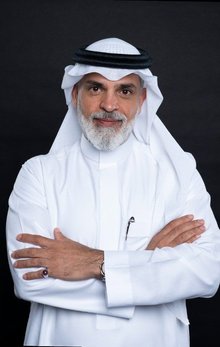
Turki Badhris
President Microsoft Arabia